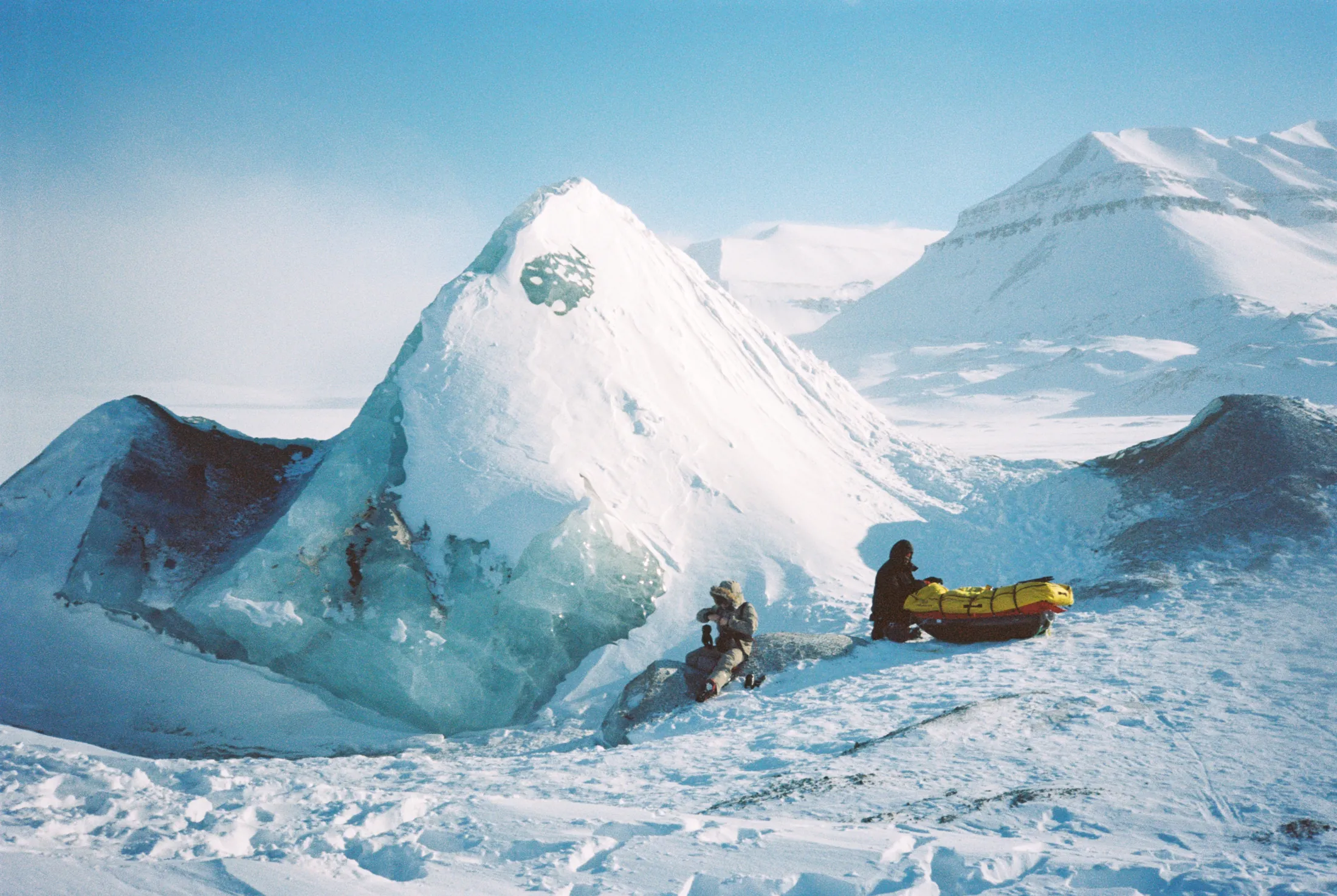
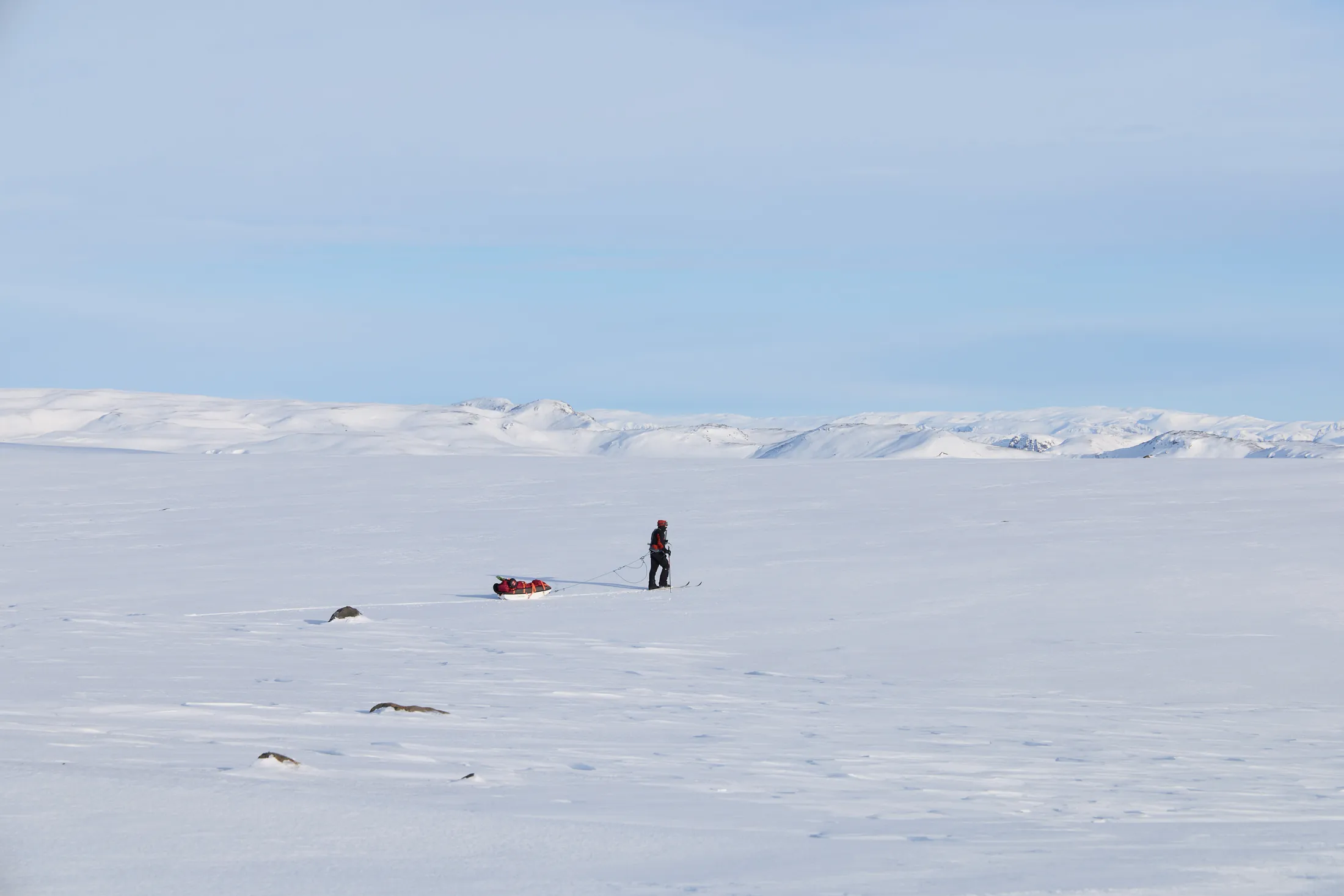
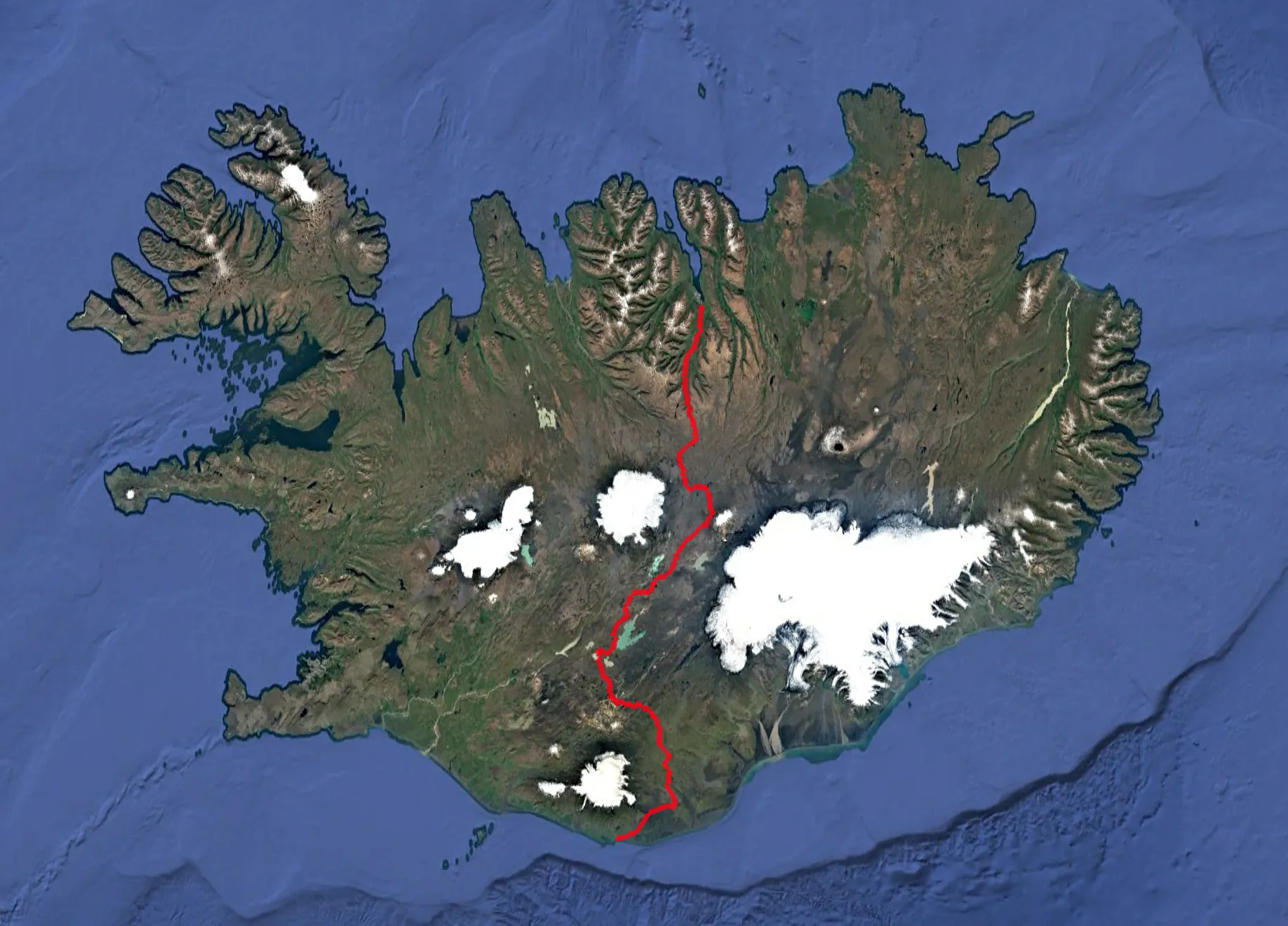
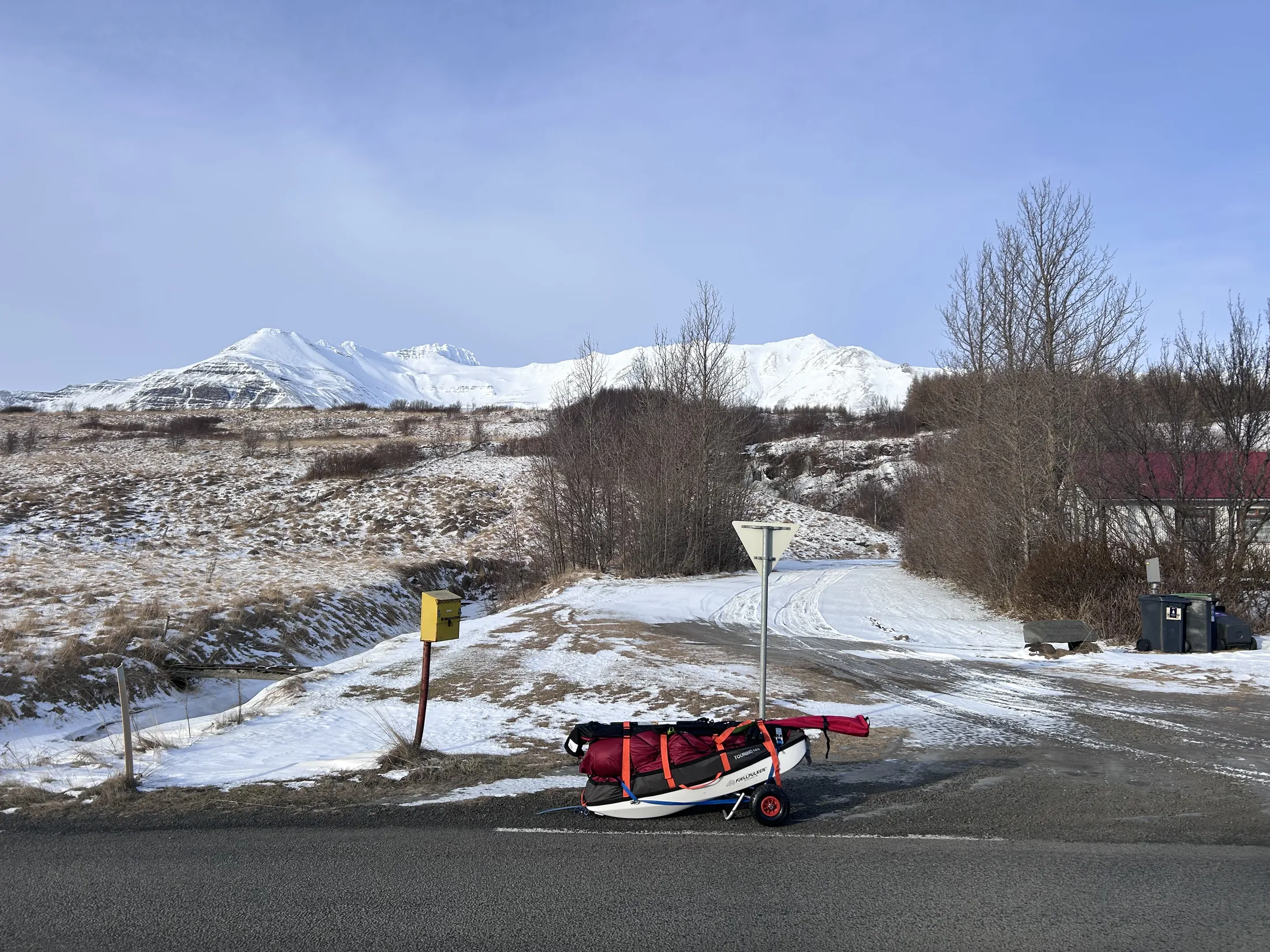
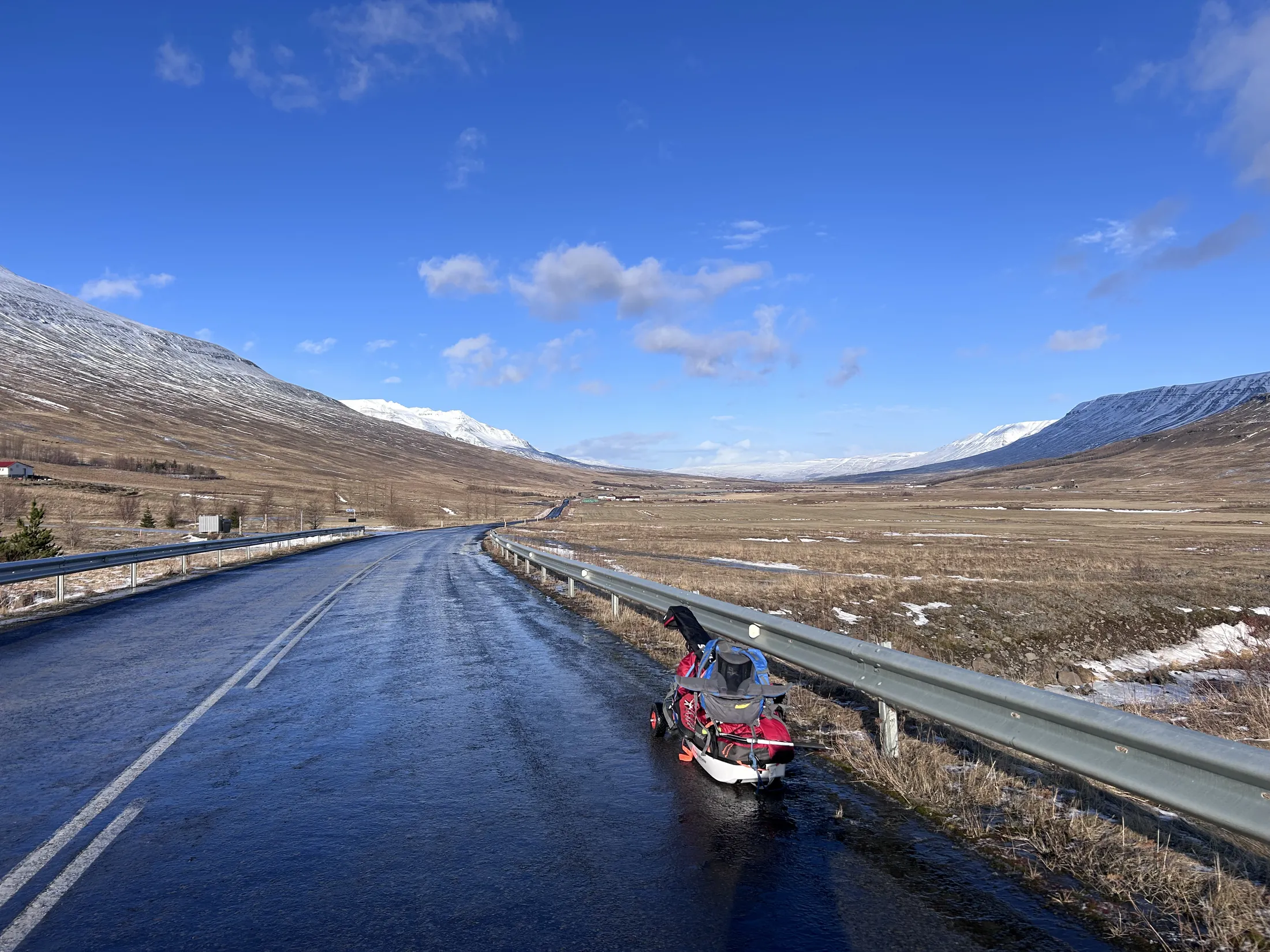
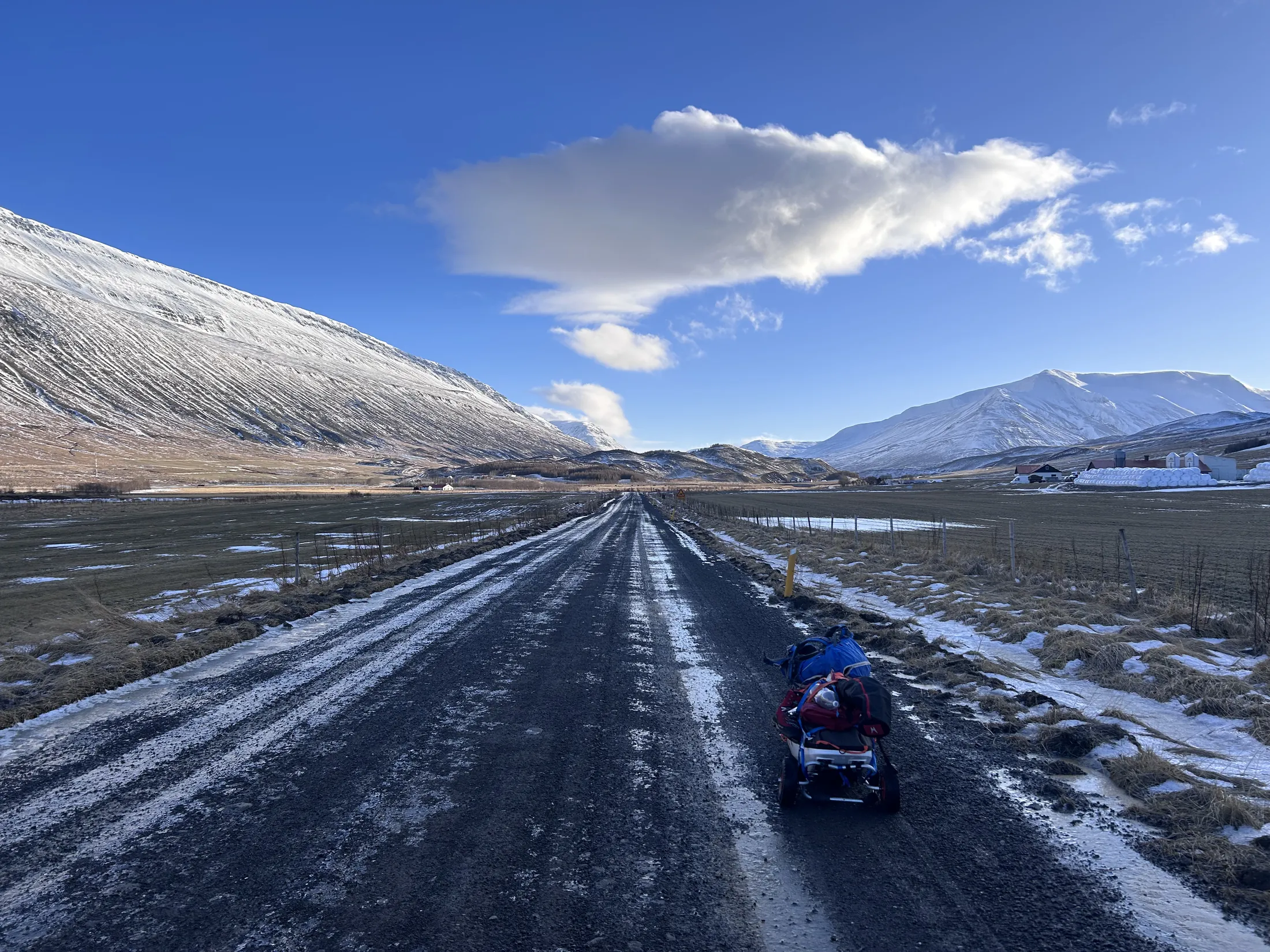
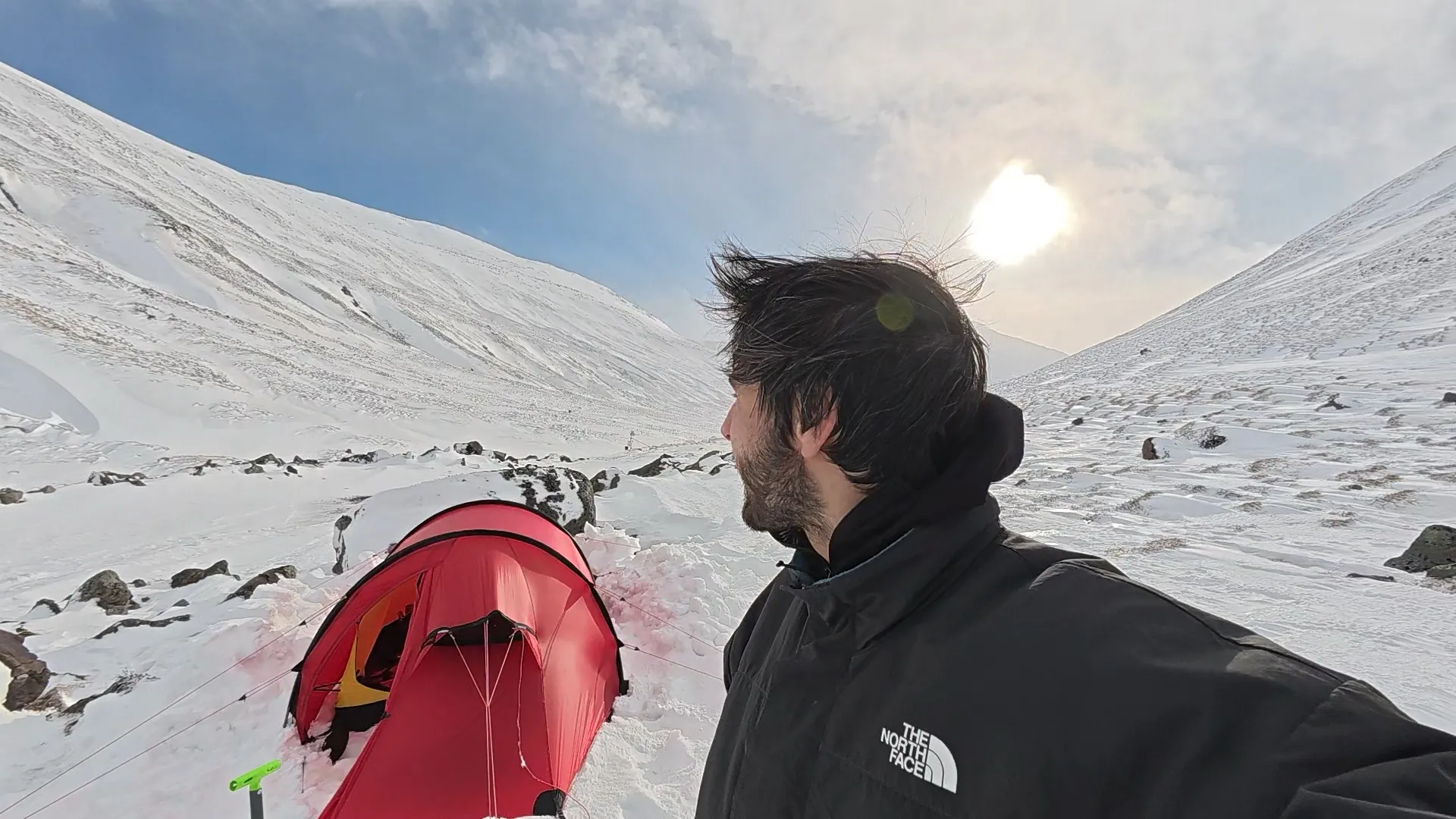
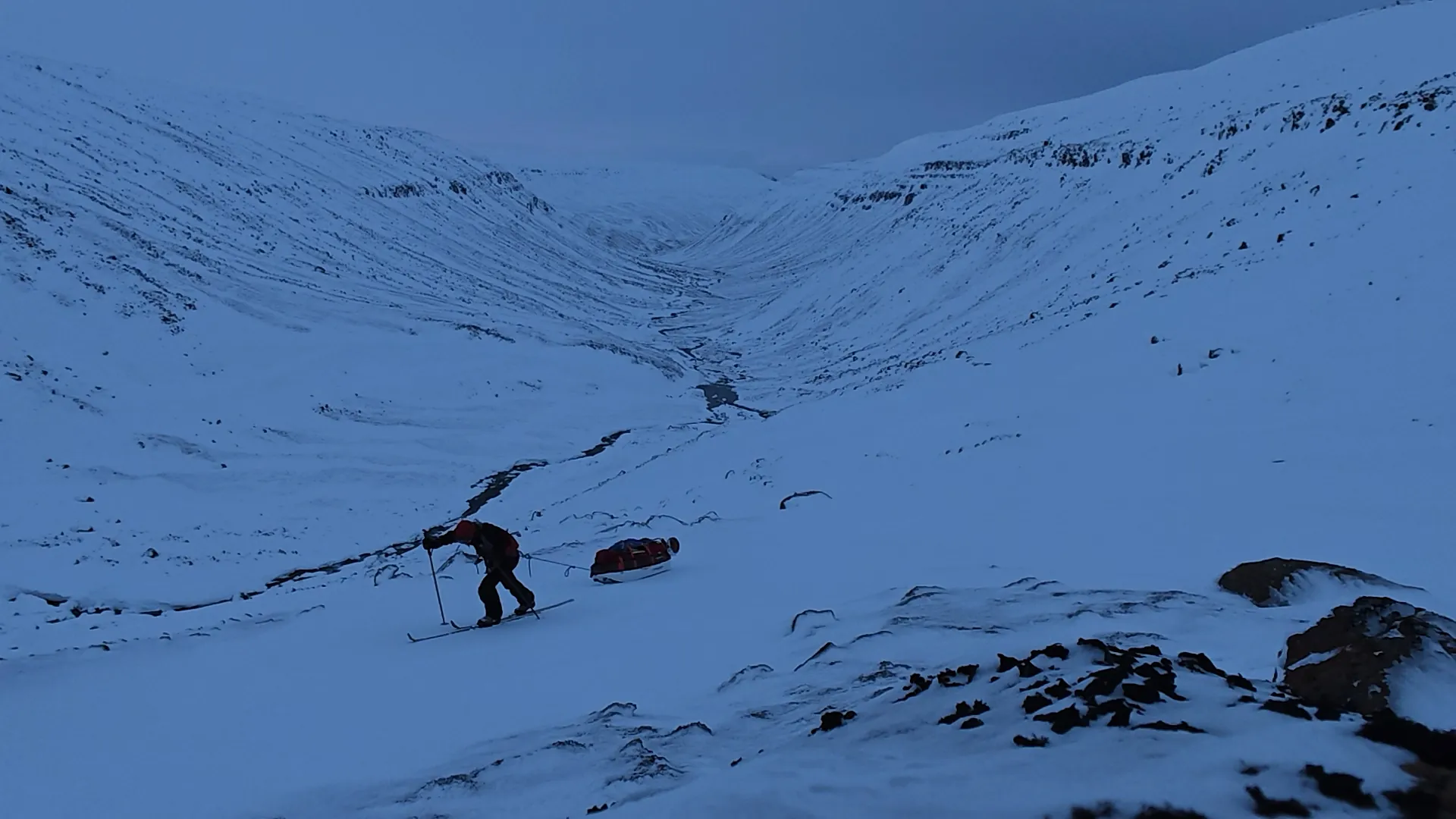
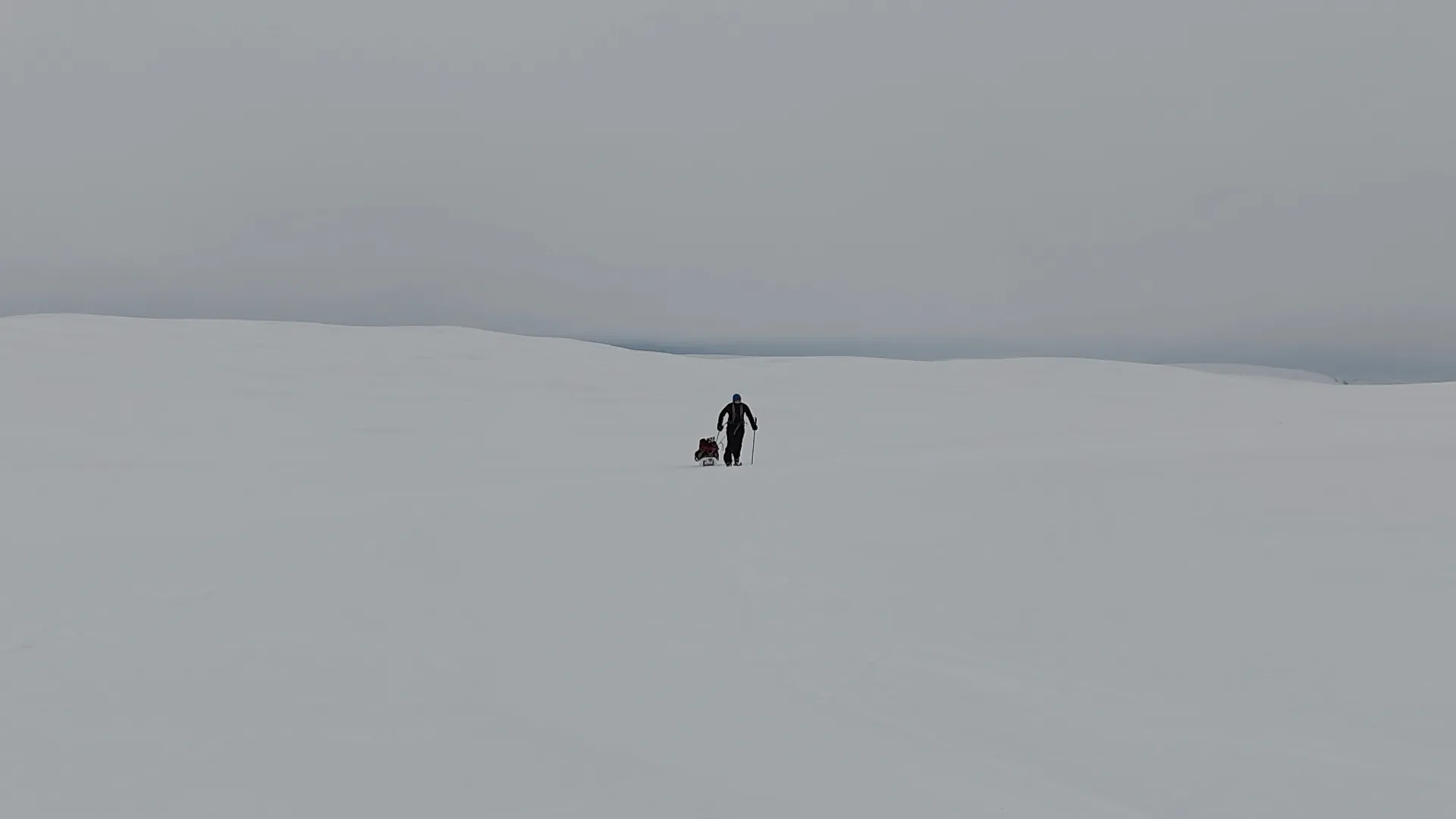
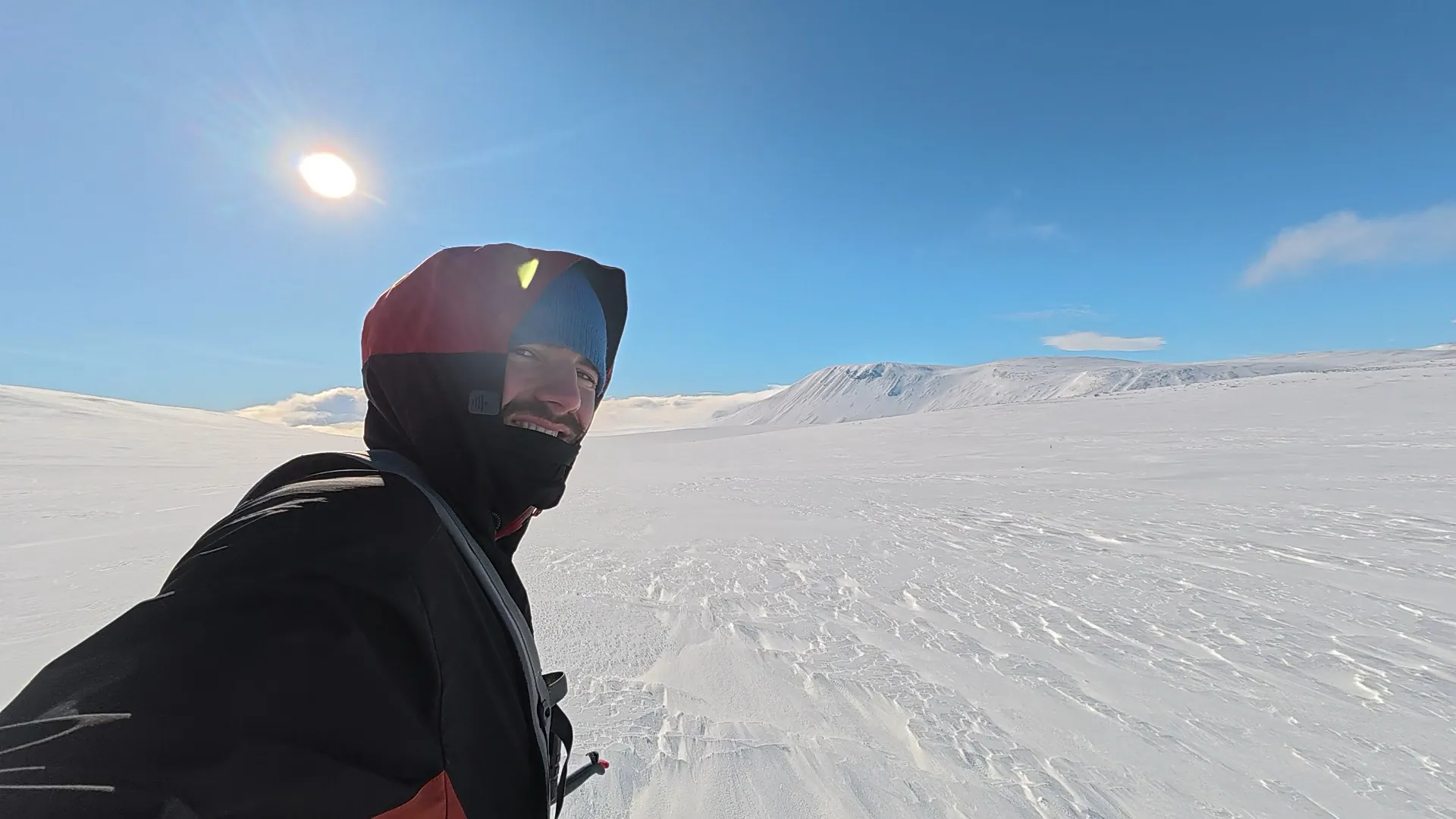
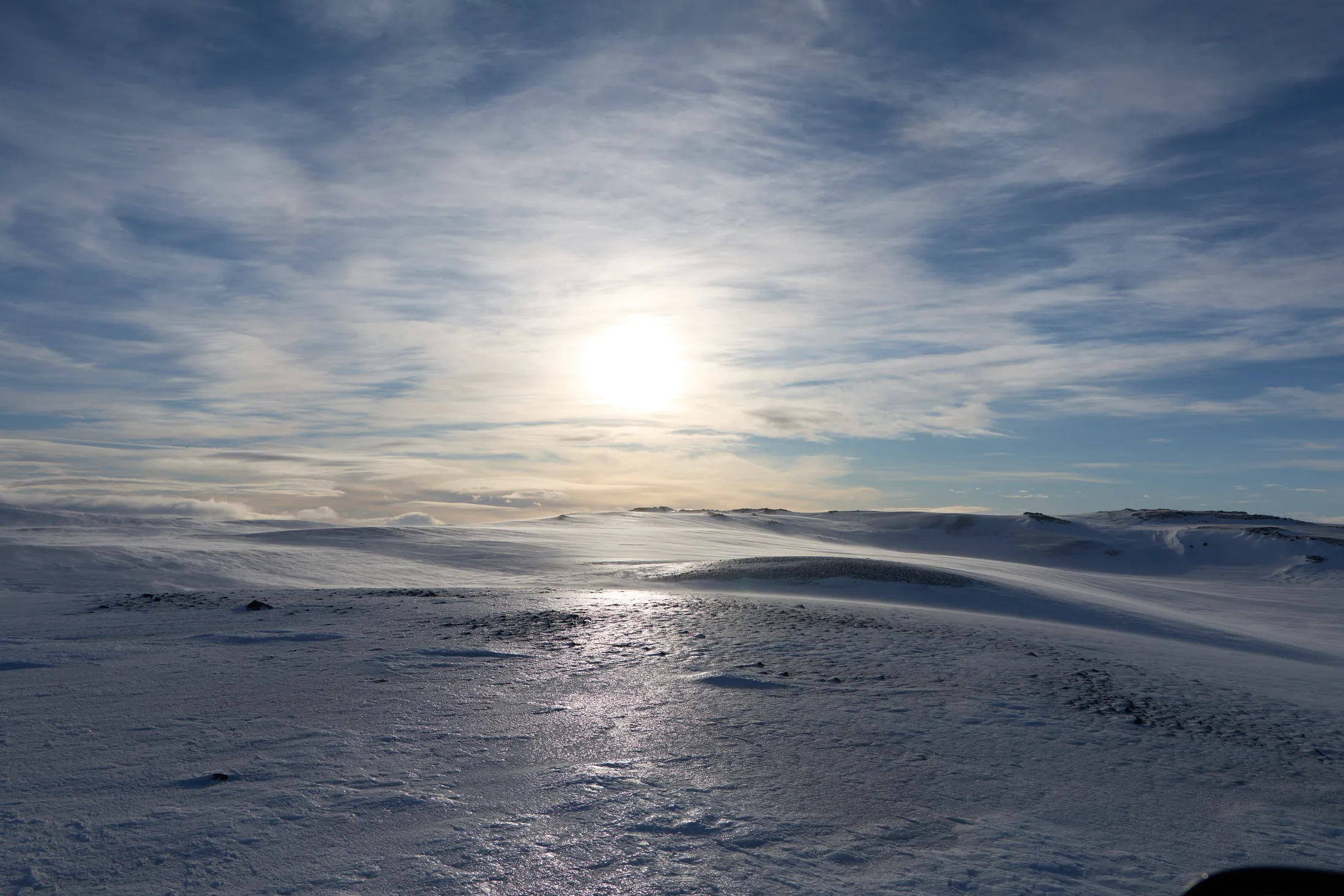
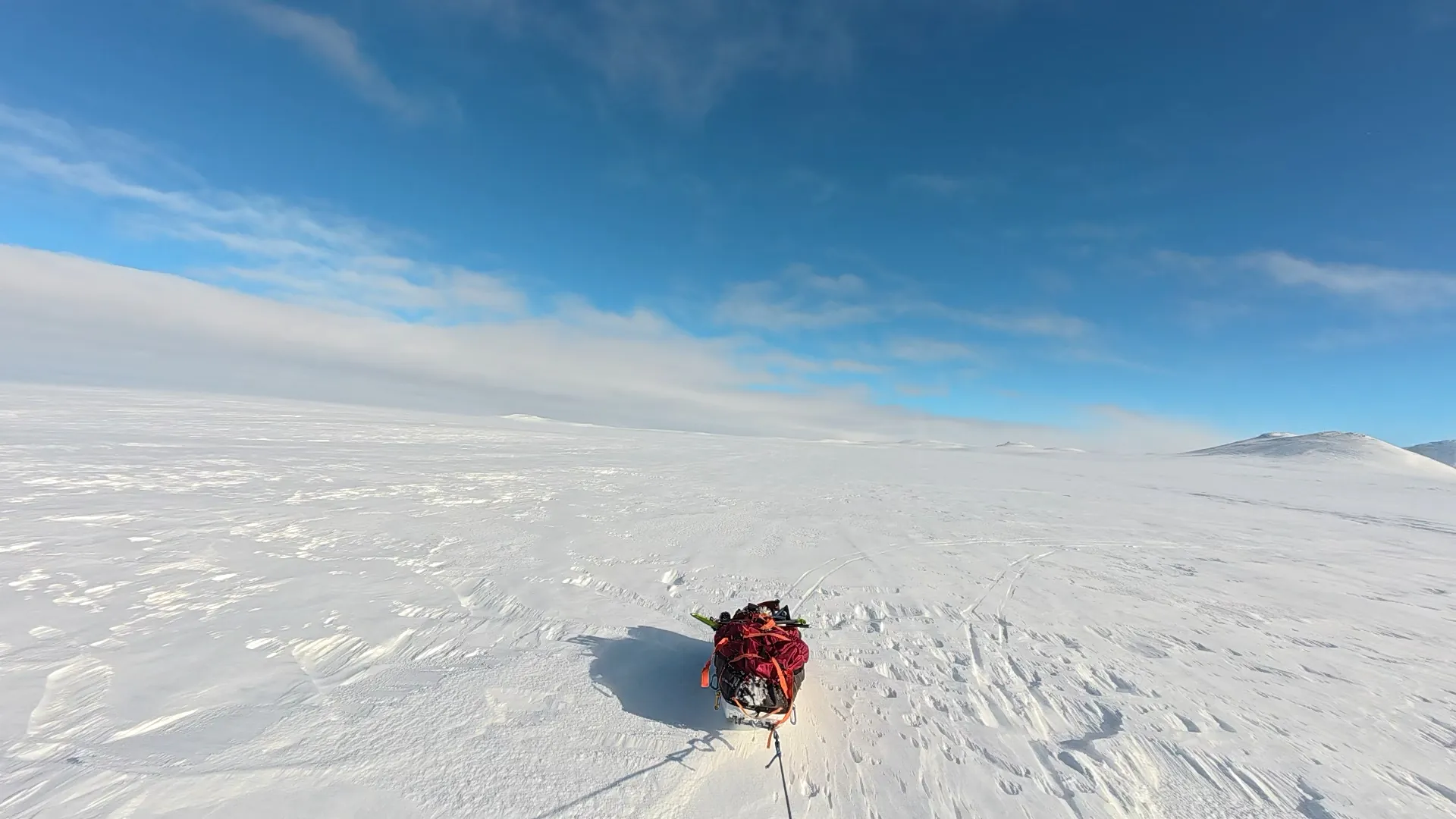
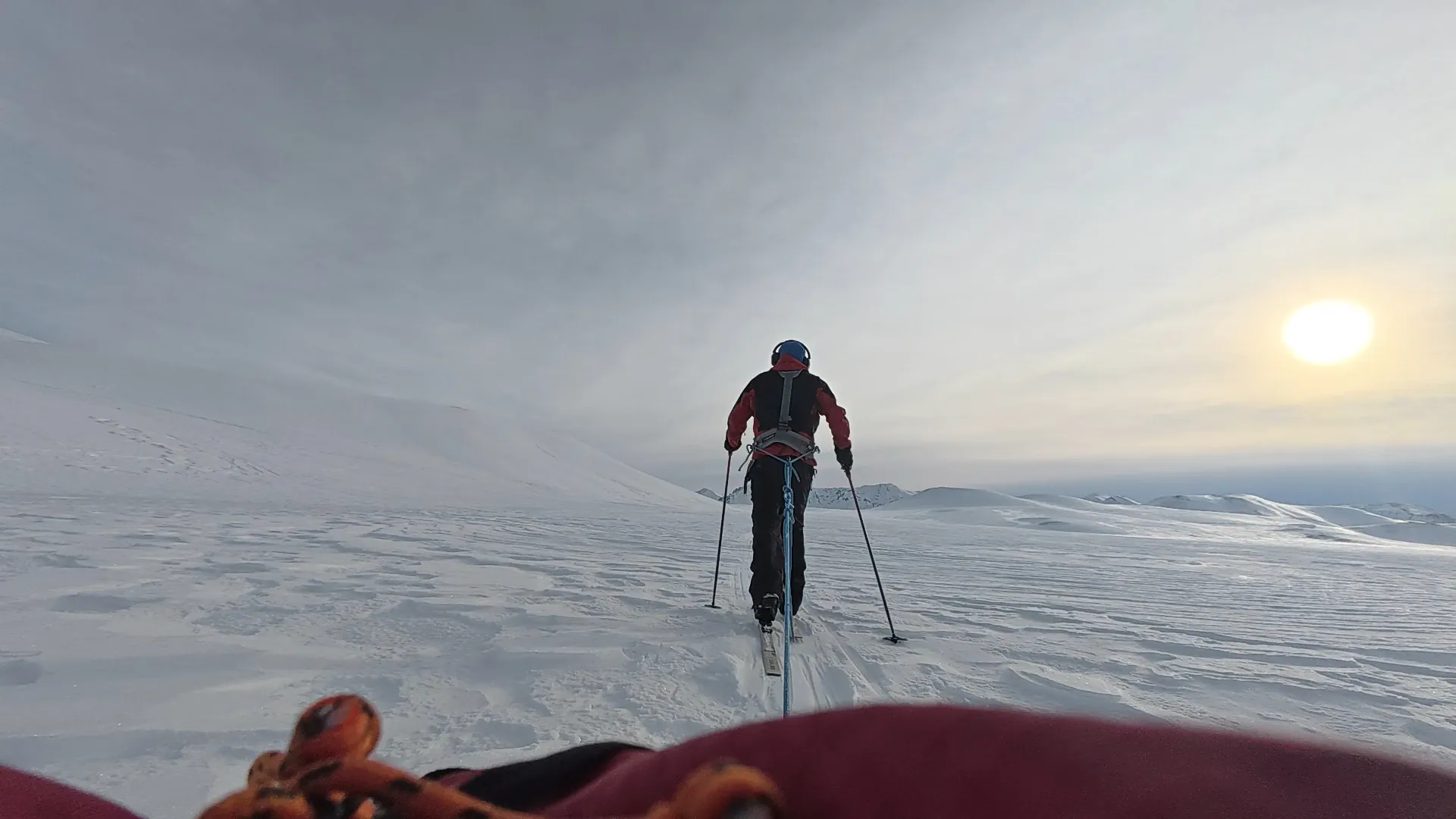
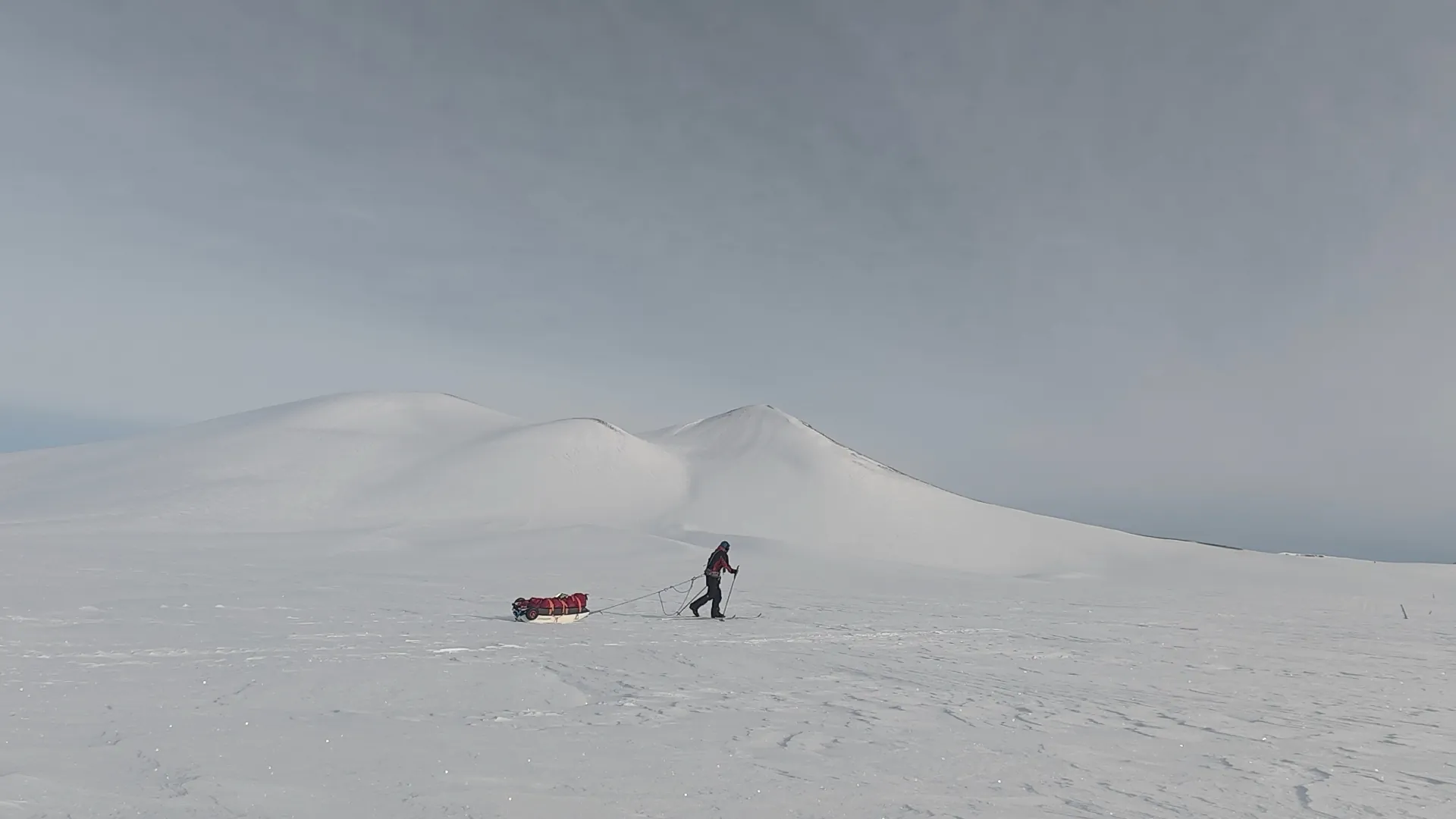
In the winter of 2025-2026, I decided to cross Iceland from north to south, alone. It was meant to be my first major solo expedition and I knew it would be hard. Before leaving, I spent months studying Iceland: its geography, its storms, the possible routes and the techniques needed to survive in a place where the weather decides everything.
Iceland is inhabited mostly near the coasts. Most of the country is a barren, windswept highland plateau and even reaching that plateau would be a challenge for the first few days, let alone crossing it and descending again.
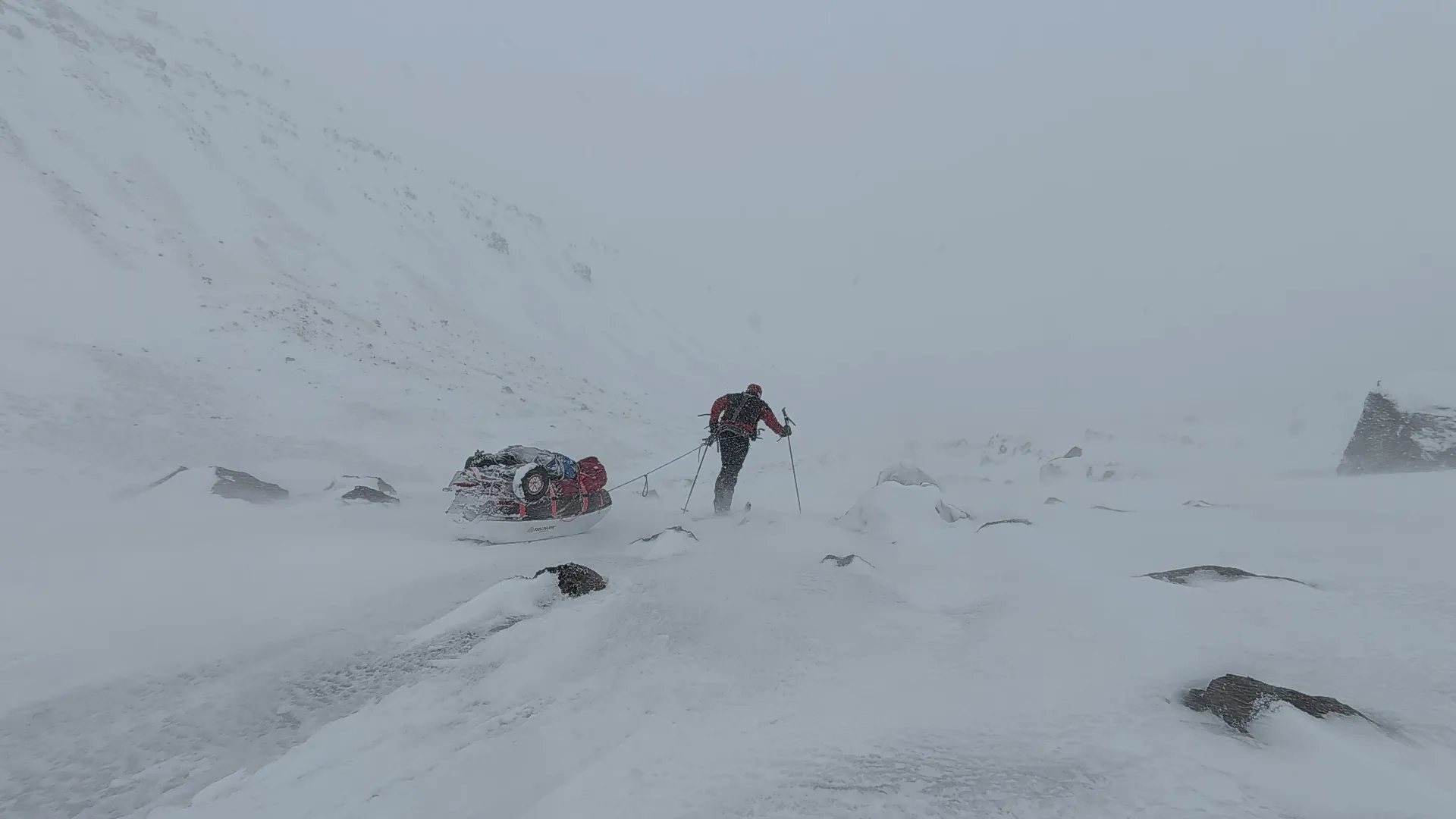
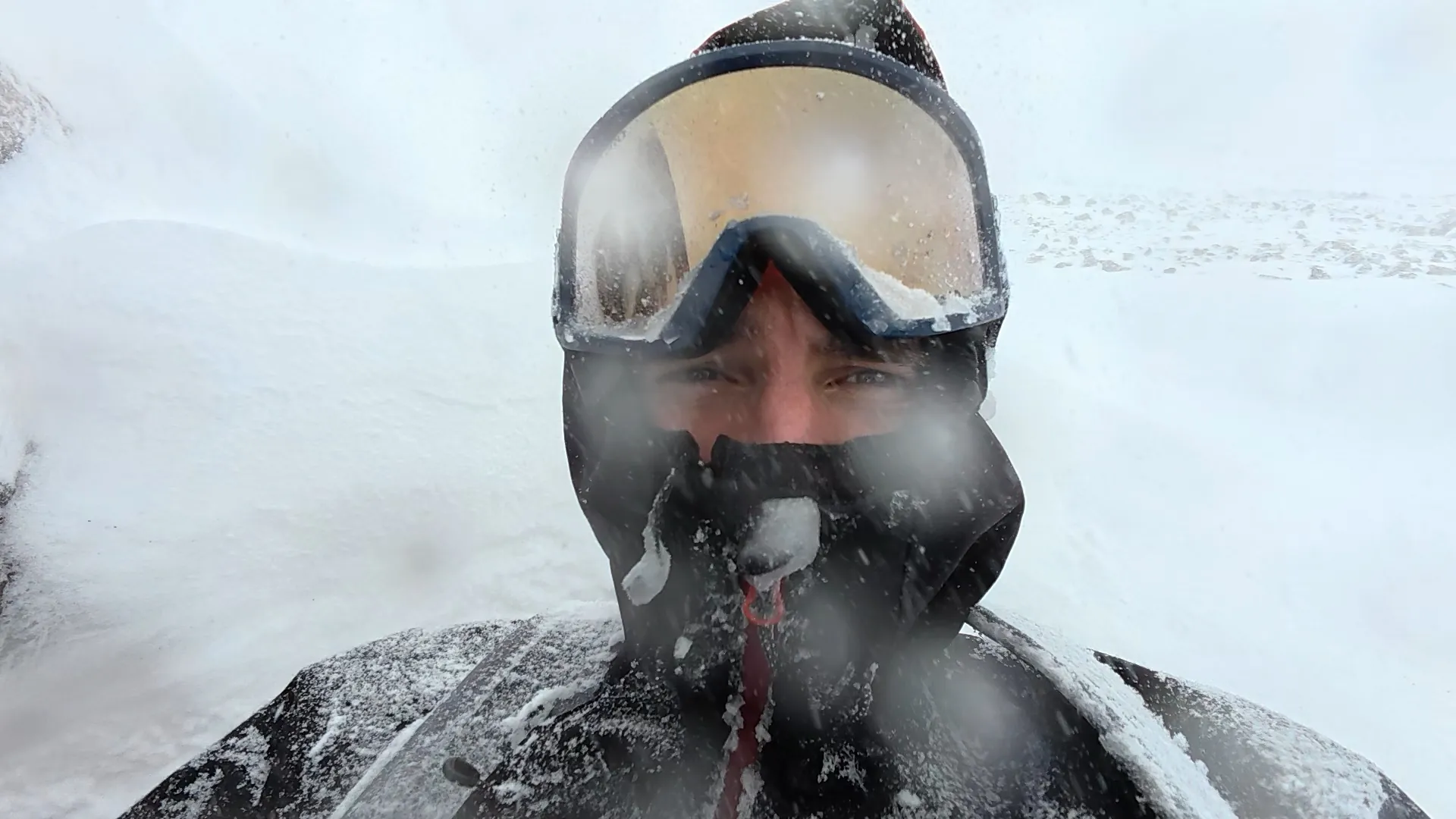
Another challenge was the weather. In Iceland, the weather dictates everything. People there do not check the temperature or the sunshine. They check the wind. There are no words for the winds of Iceland. A video might do them justice.
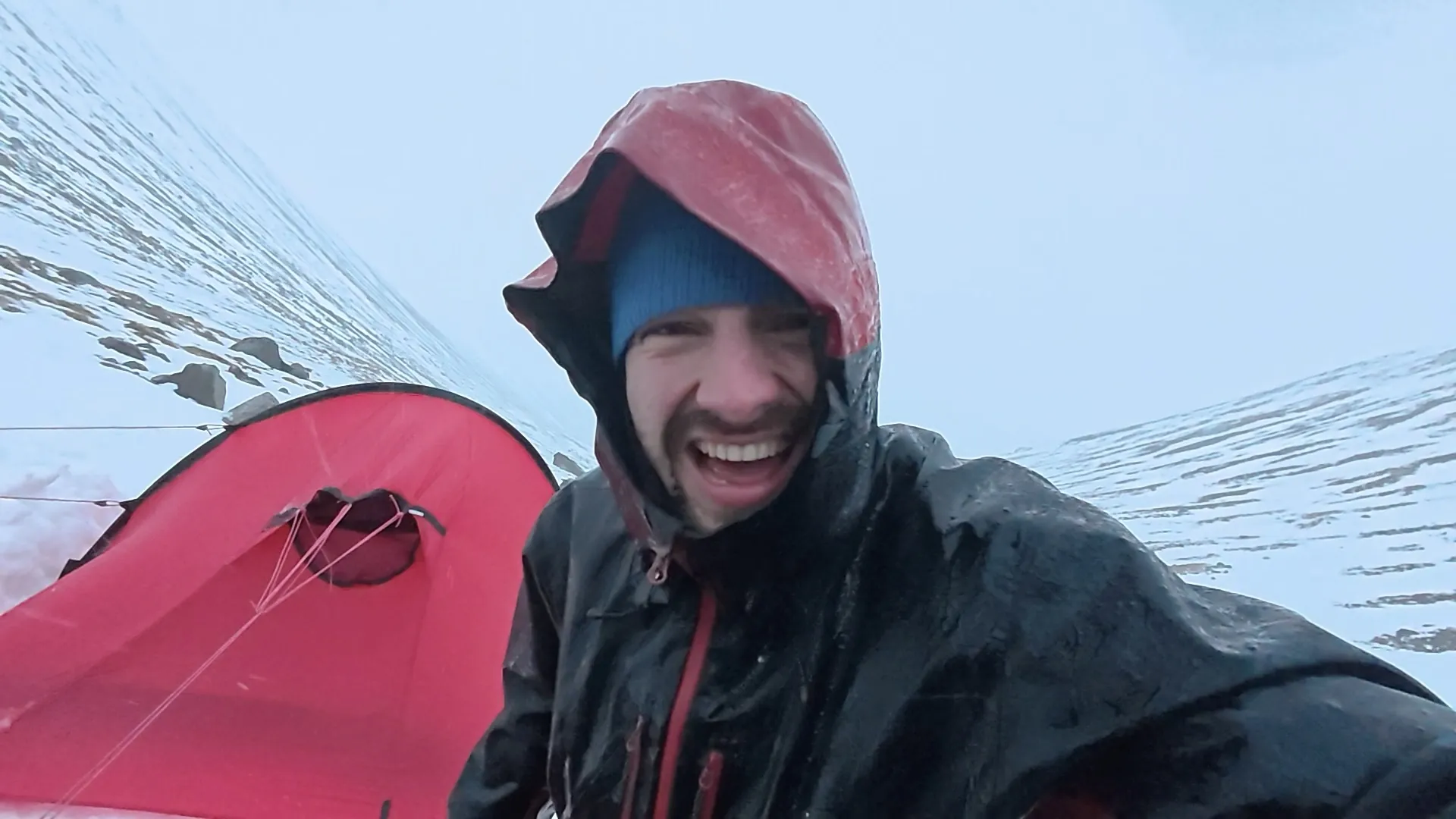
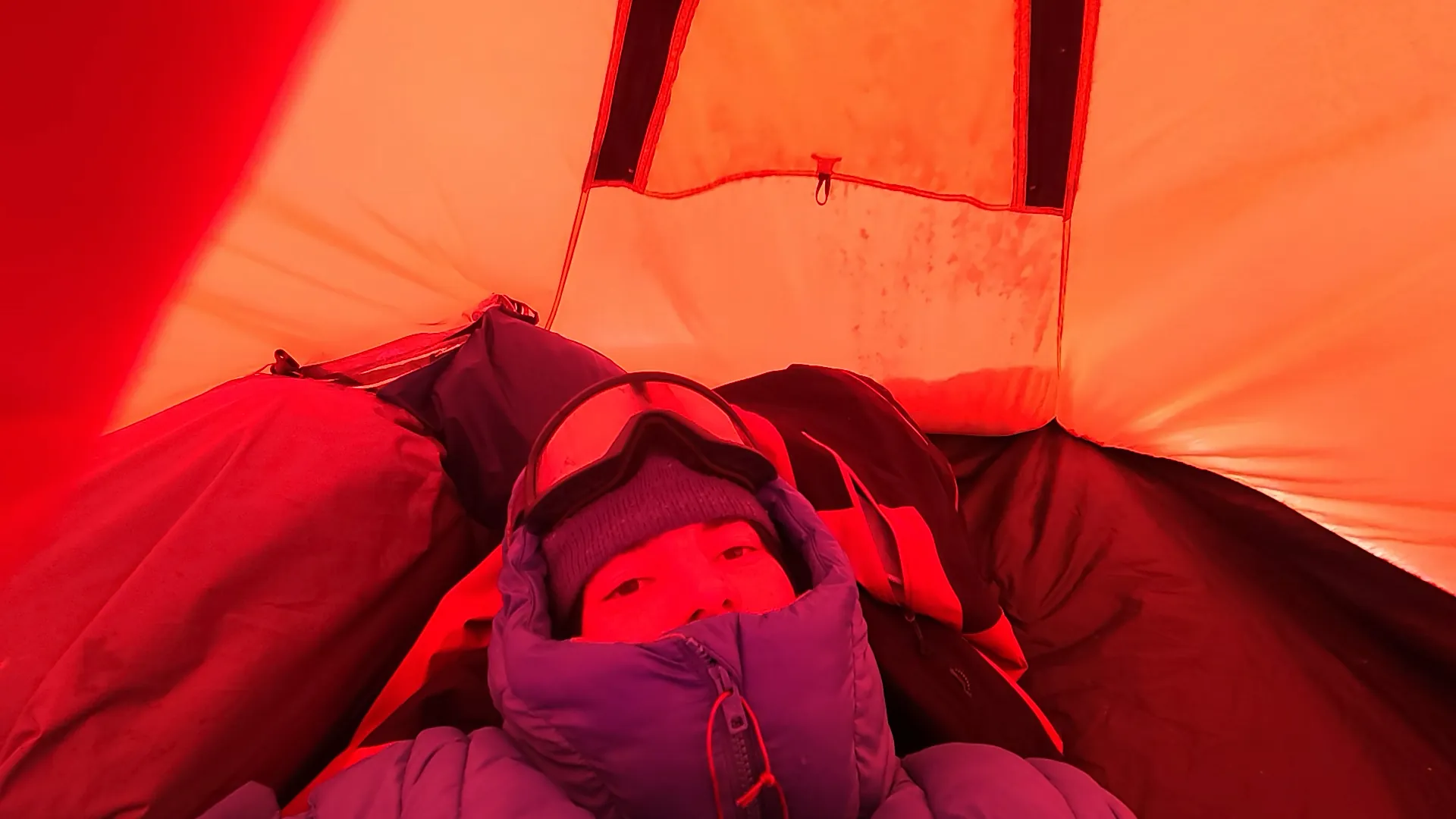
My expedition took around twenty-two days, with four days of waiting in my tent as the blizzards were too strong to continue. Those were probably the hardest days. During all that time I had to manage extreme winds, cold, condensation and do every little thing myself.
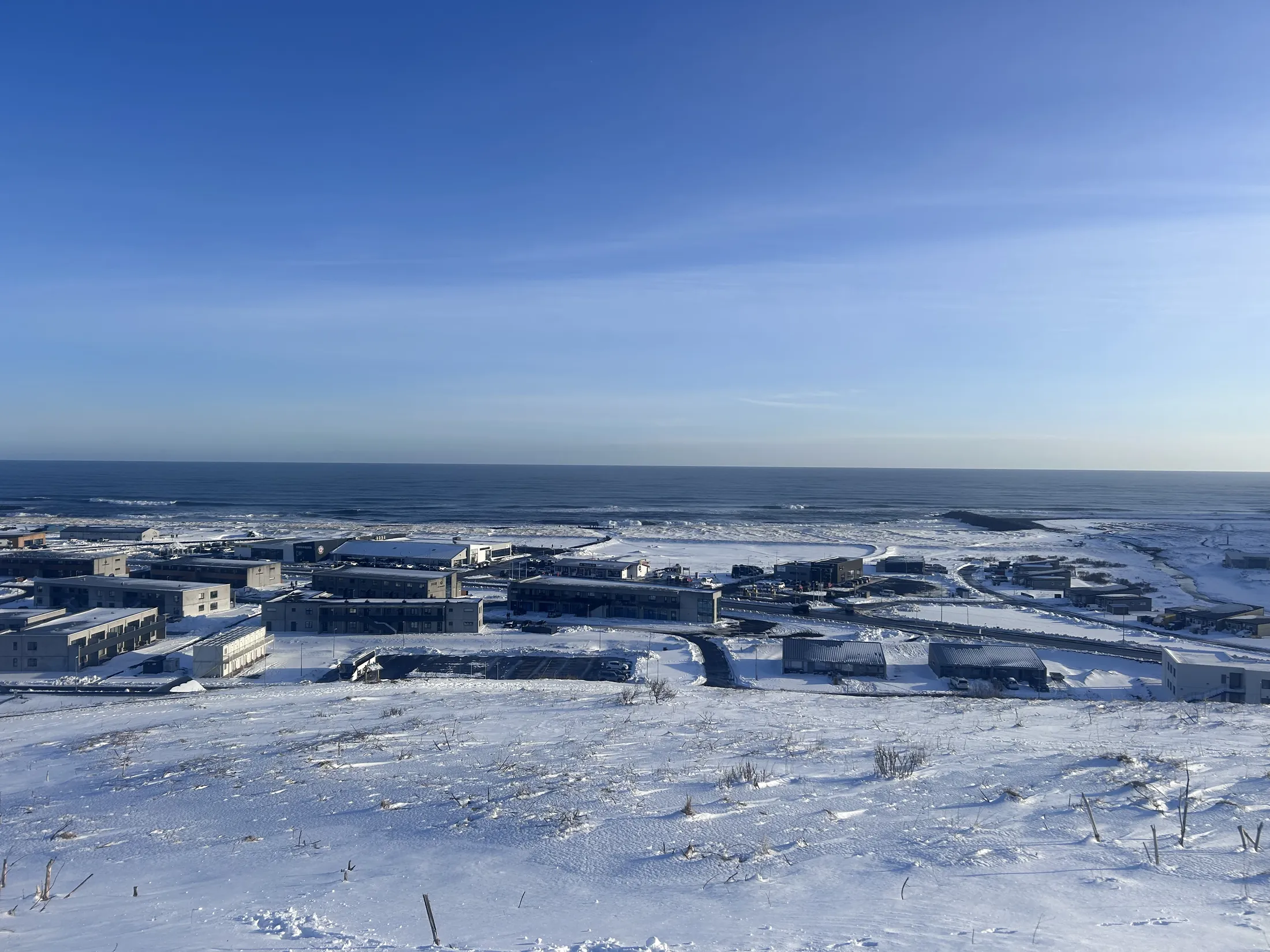
When I reached the ocean after facing these difficulties every day, I cried from relief and wonder before the scary beauty of this island. I also knew that one day I would be back.
Below is a detailed journal of this journey.
0
Day 0: Arrival in Iceland
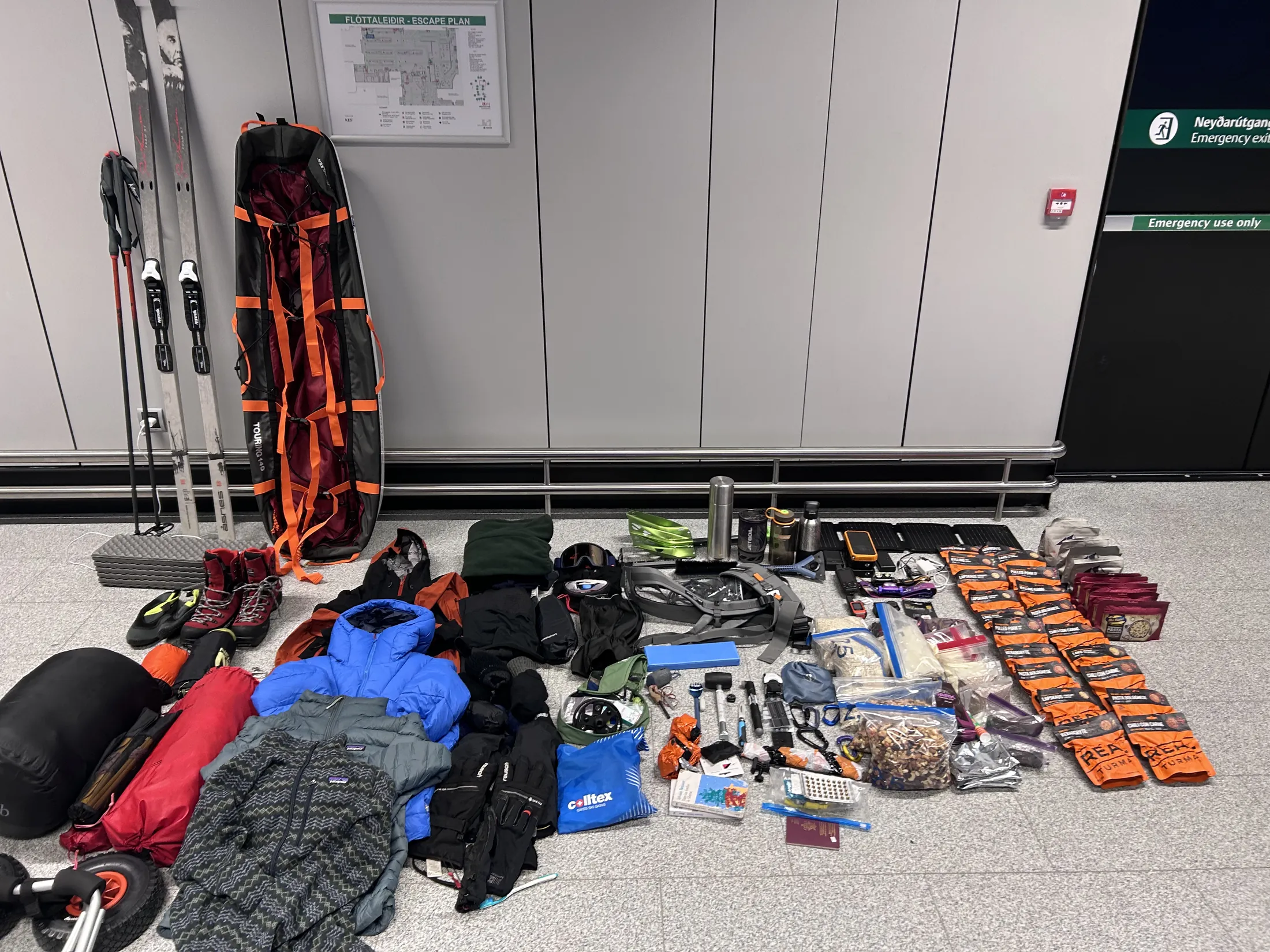
I arrive in Iceland and check my gear one last time to make sure everything survived the journey. At the hotel, I meet a Belgian. We realize we both need to get to Akureyri the next day.
A storm is forecast. It will be my first Icelandic storm. The buses are cancelled before we even leave: an introduction that says a lot about the country. We change our plans and rent a car to reach Akureyri, the starting point of the expedition.
1
Day 1: Departure from Akureyri
It's the big departure. I've been preparing this expedition for months, but a first problem shows up: there is still no snow. That is no surprise. Even in winter, Iceland's coasts stay relatively mild under the influence of the Gulf Stream.
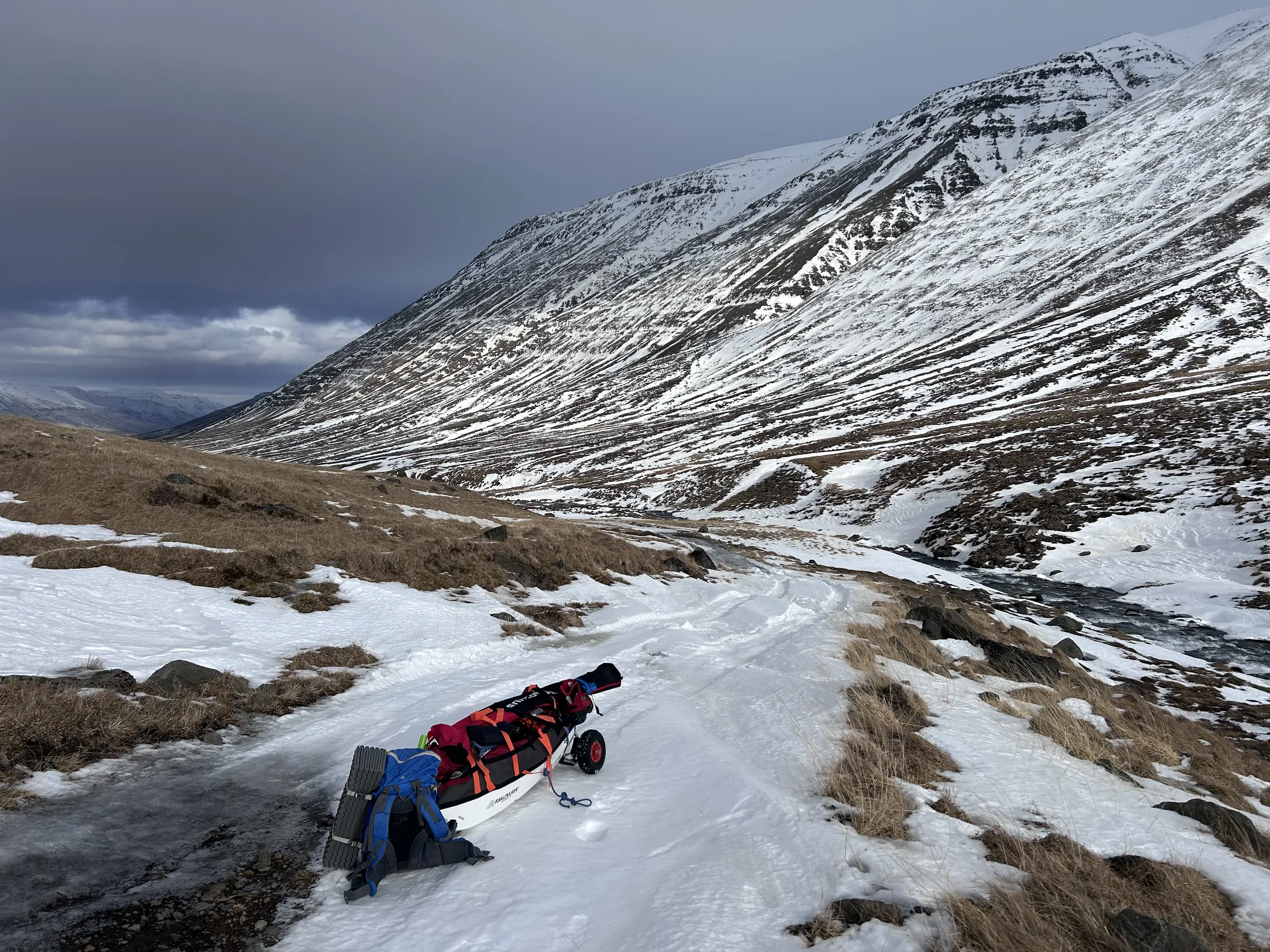
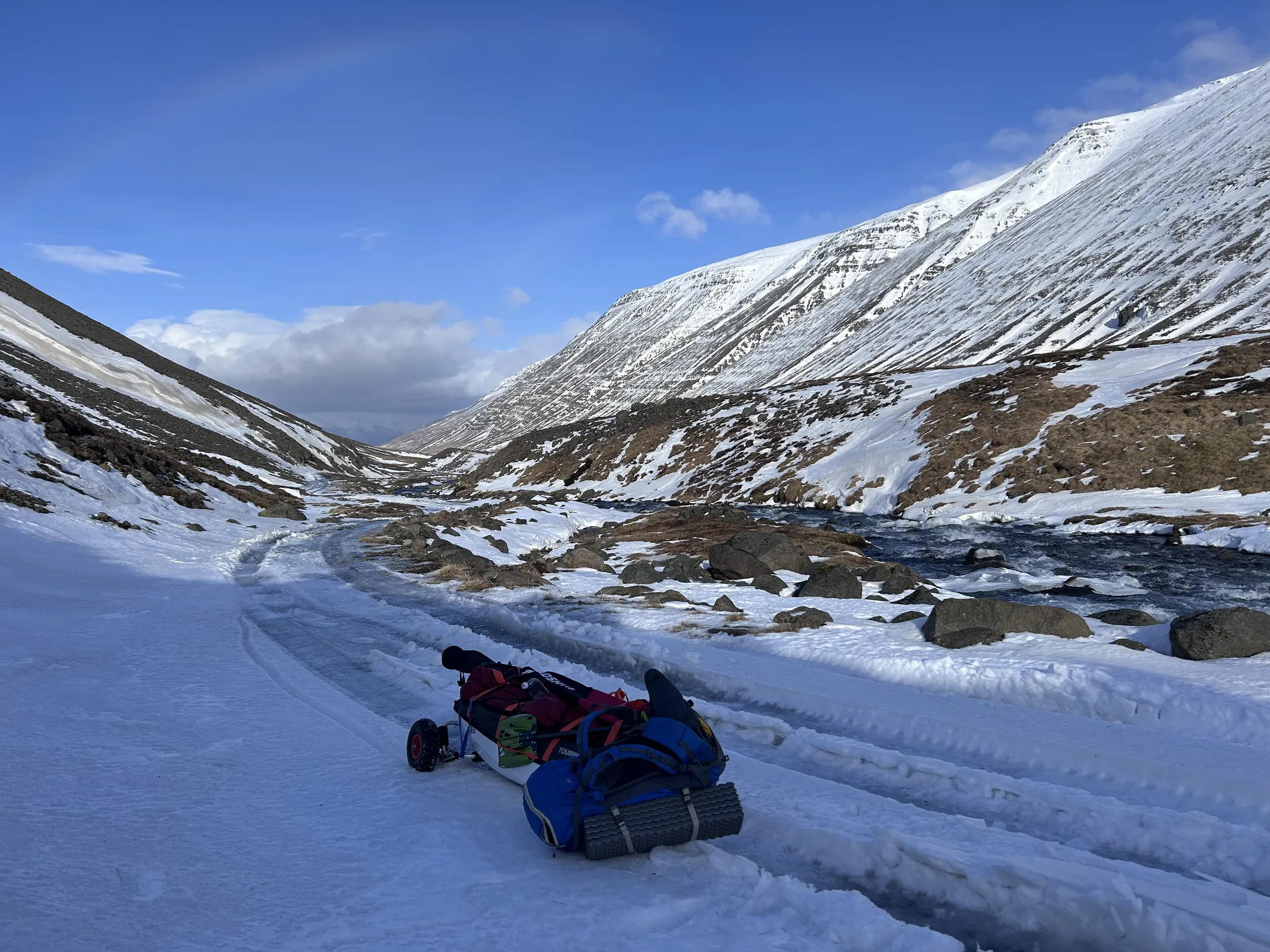
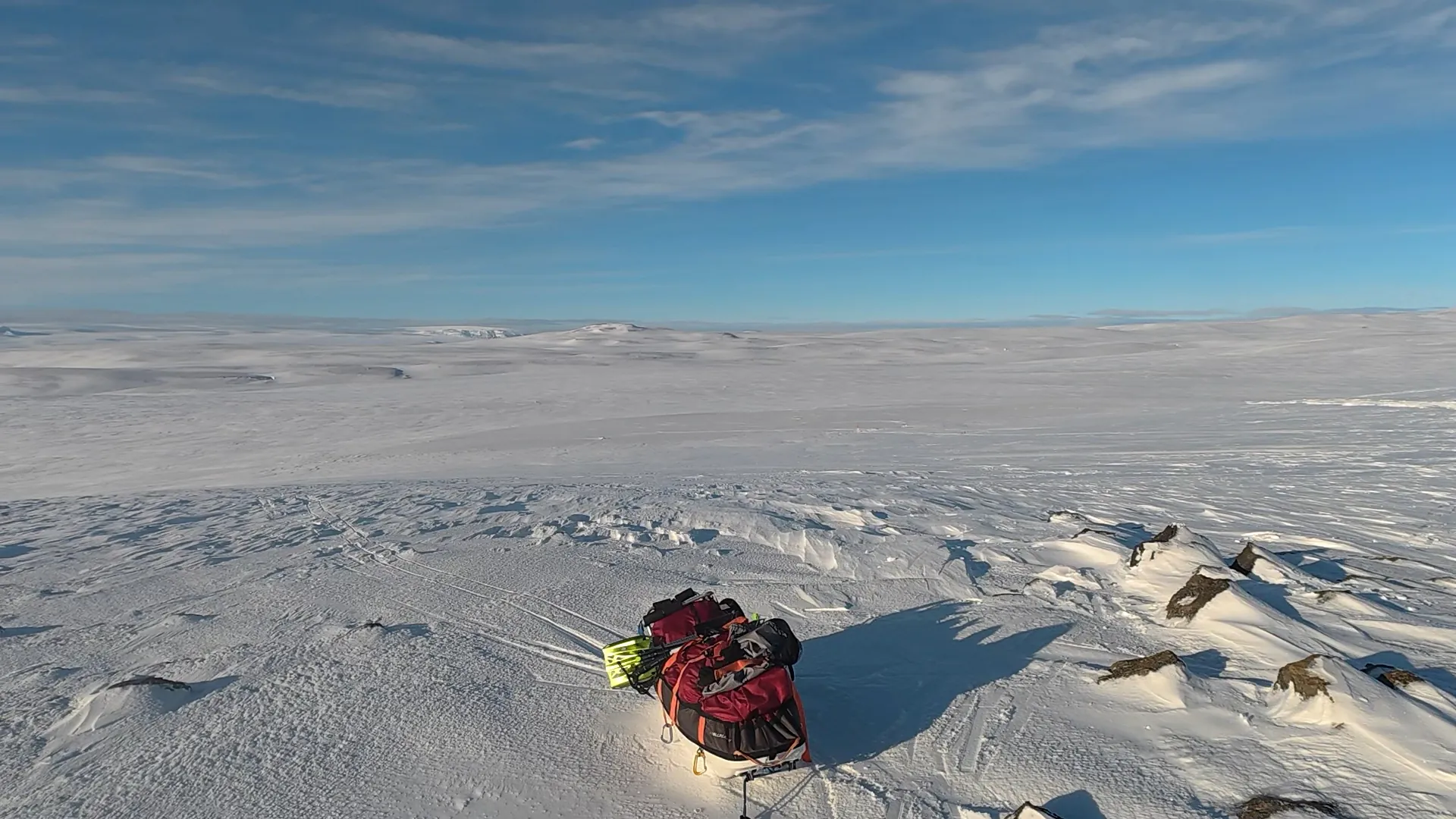
I had planned for this by bringing kayak wheels for the pulka. In theory, the idea is good. In practice, it is torture. The sled weighs nearly 60 kg; part of the weight rests on the wheels, the rest directly on my harness. Punctures keep coming and the pulka tips over regularly. The first kilometres are far more exhausting than expected.
2
Day 2: On the road
Progress is still slow, but I start to find my rhythm. I knew this first stretch would be the hardest part of the expedition. I move on already thinking of the highlands, impatient to finally reach the snow.
The tarmac gradually gives way to gravel, which slows the pulka even more. A first puncture costs me a little time, but that is part of the game. I feel fit, even if the apprehension grows as I get closer to the plateau.
3
Day 3: Onto the snow
I gain altitude. Temperatures drop and the wind picks up. I finally reach the first snowy stretches and ditch the wheels. They will not be needed again until the descent from the highlands, two weeks later.
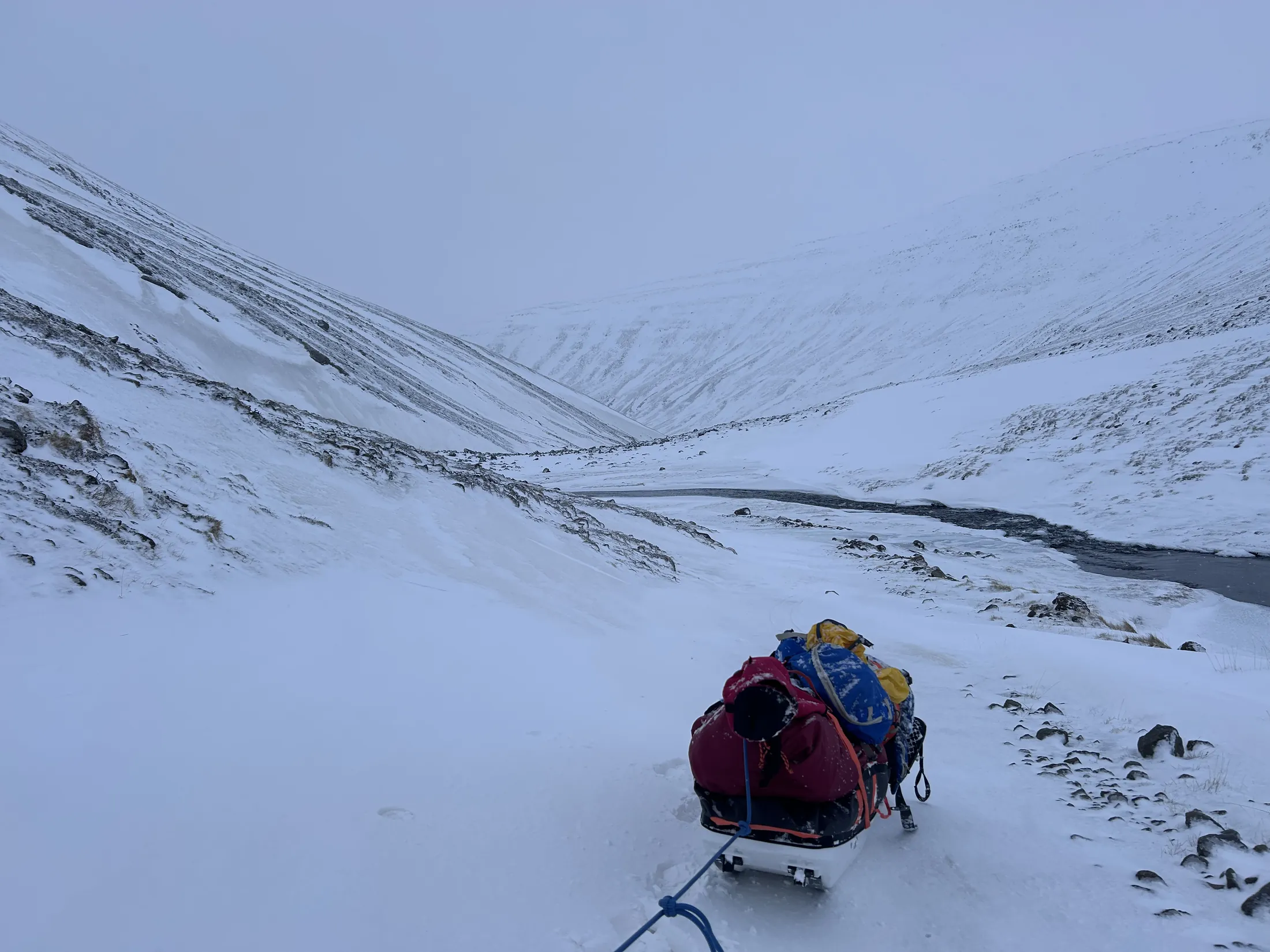
I find myself caught in a blizzard and am forced to keep moving: nowhere to pitch the tent. Conditions deteriorate quickly. I eventually find a spot flat enough and manage to set up camp despite the snowstorm.
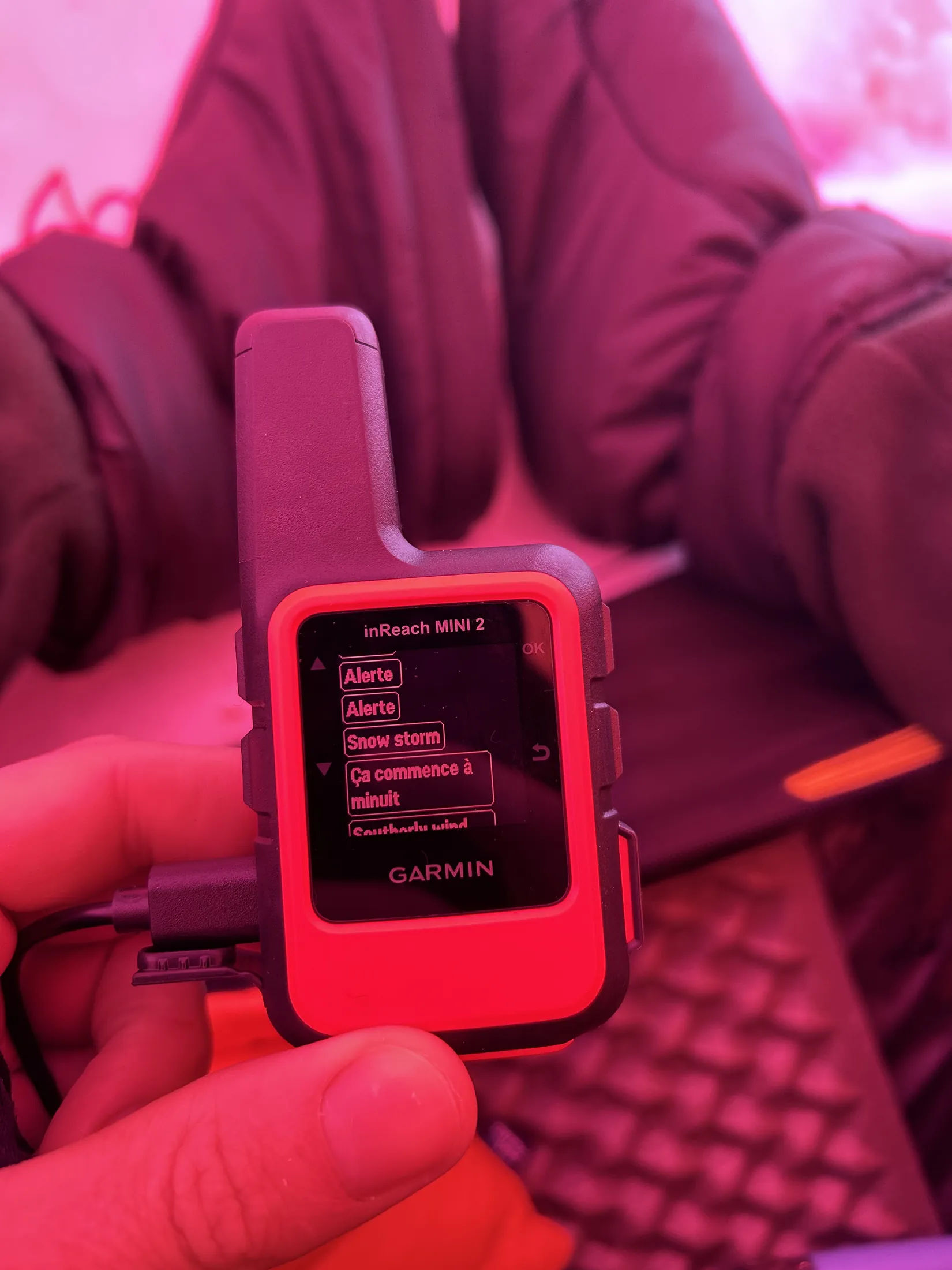
Around midnight, I learn that a much larger storm is on the way. I struggle to imagine that conditions could get any worse.
4
Day 4: Storm
I get an alert from my friend who follows the weather from Brussels. I call him Rico Météo. Without that alert, I would have found myself in the heart of an extremely dangerous storm, with no way to prepare for it.
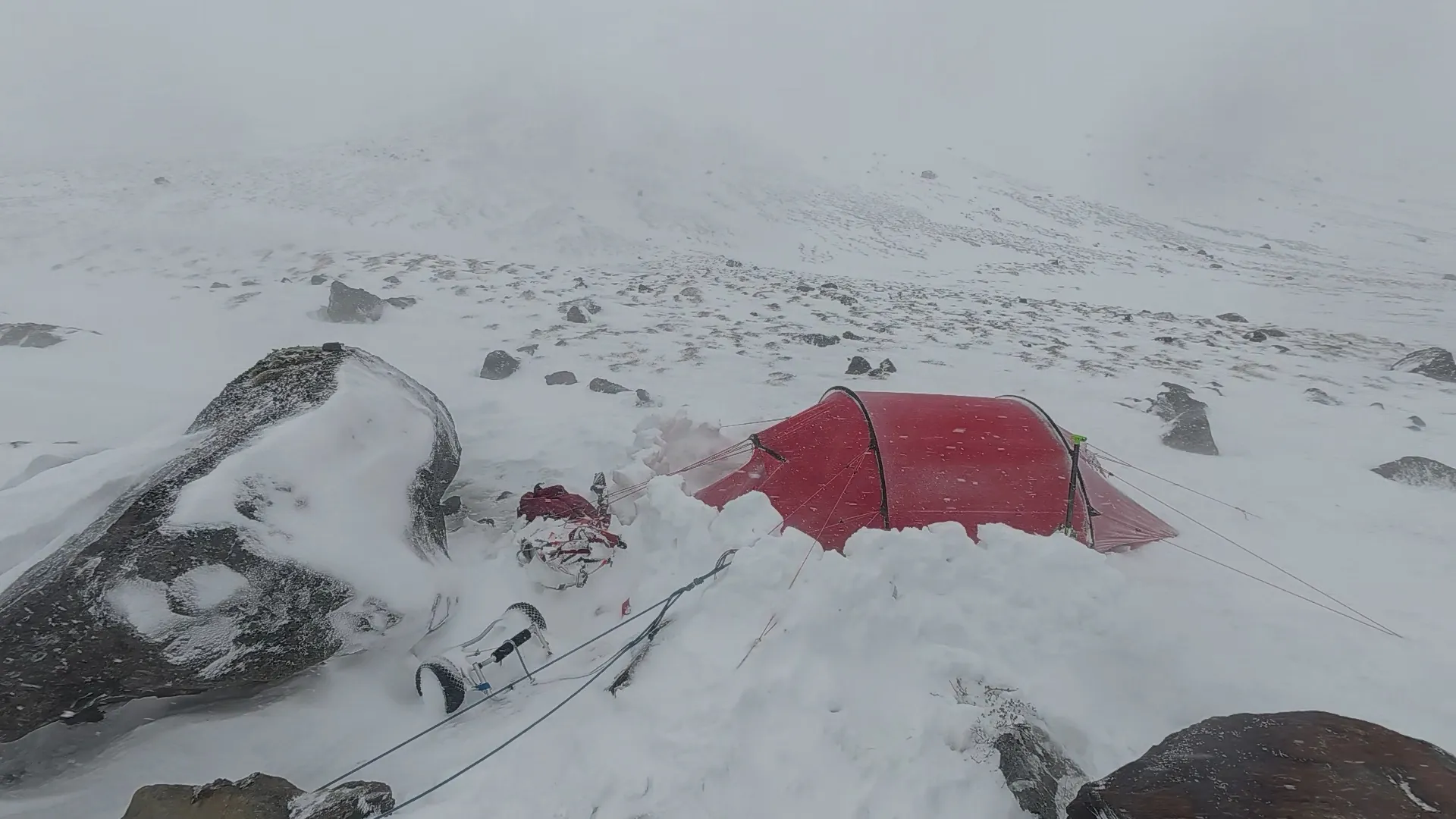
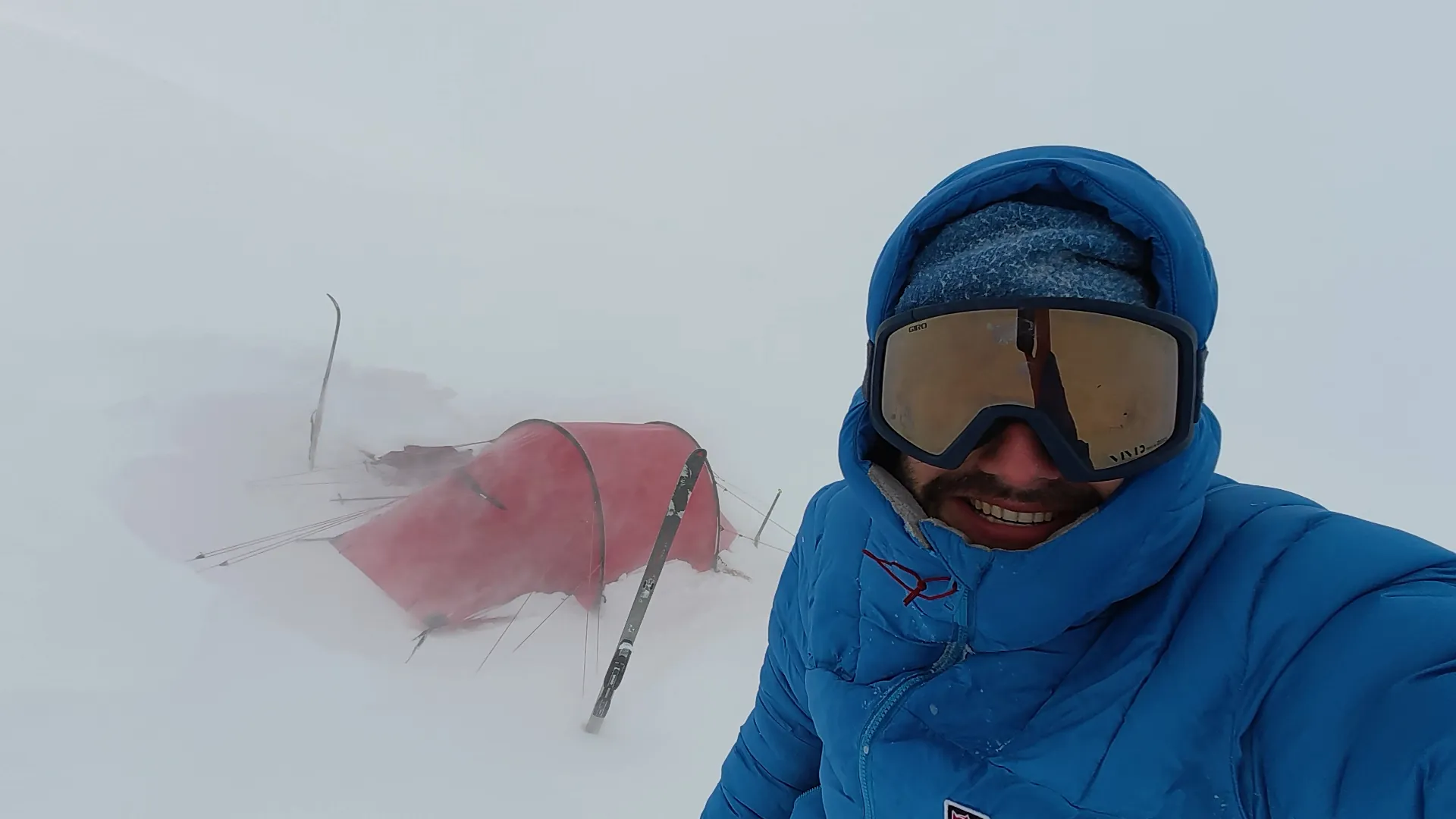
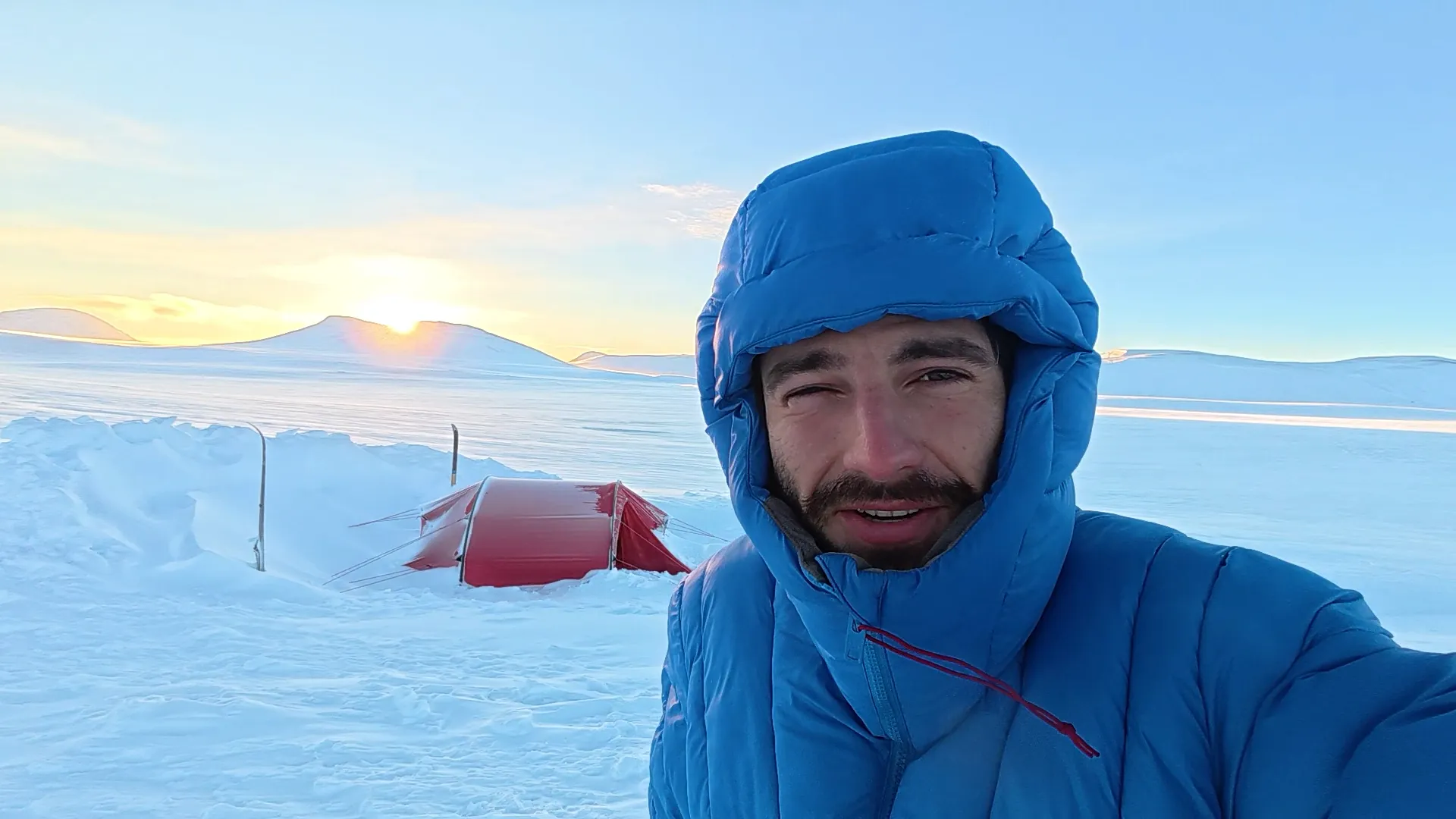
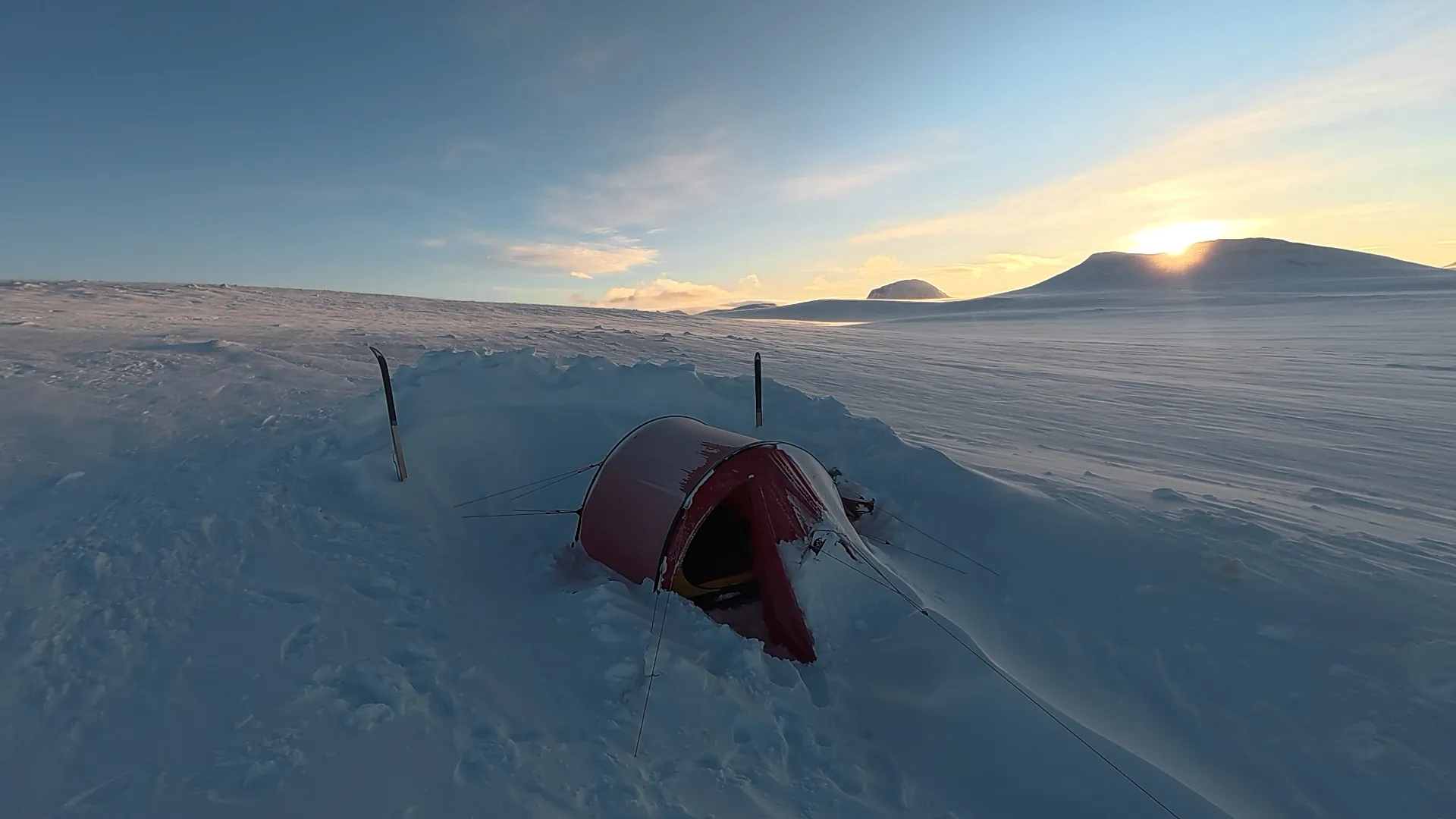
I leap out of my tent. I secure the poles, tighten all the guy lines and build a small snow wall to reinforce the tent. I wait for the storm to arrive.
The forecast is bad: winds over 100 km/h with gusts that can reach 150 km/h. But the bigger problem is that this storm brings positive temperatures with it. The snow melts and gradually soaks all my gear.
Within a few hours, I go from rain to hail, then to snow, while the gusts push me to the ground. I am forced to crawl to check whether my tent is still properly secured. I am horrified to learn that this storm is forecast to last 48 hours.
5
Day 5: Stuck in a tent
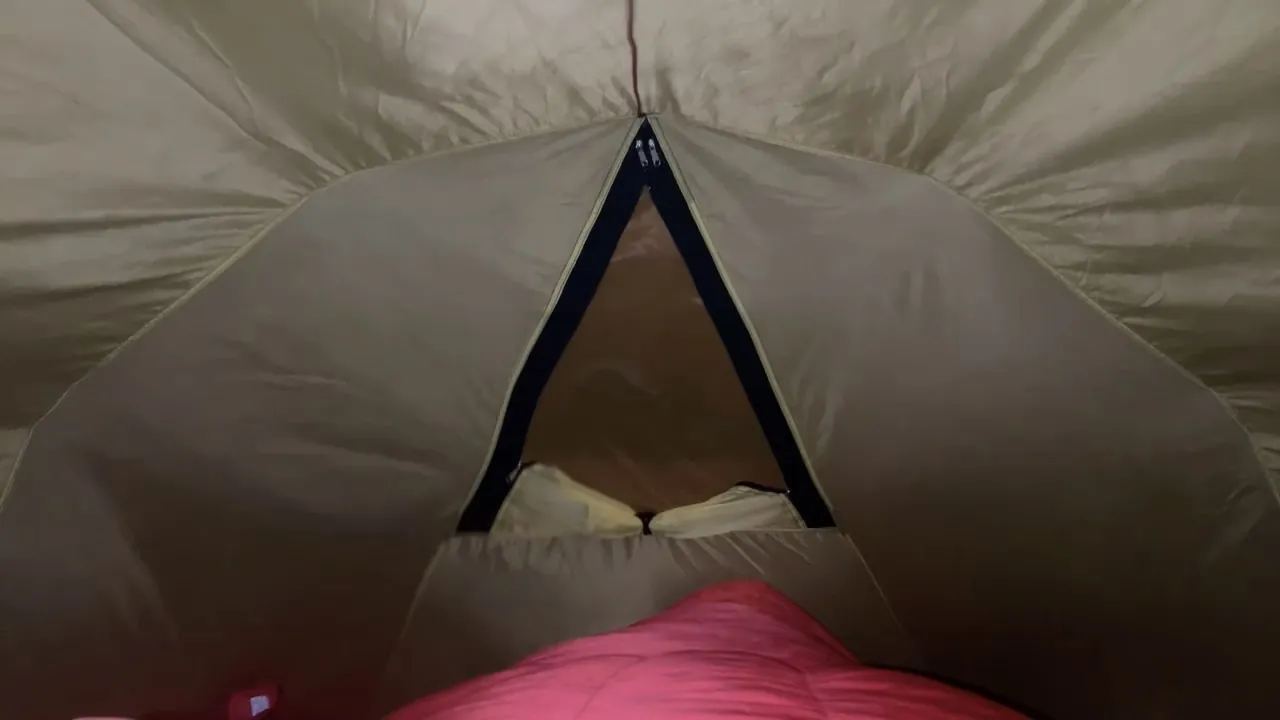
I've been stuck in my tent for 24 hours. The tent is holding, but the endless slamming of the fabric keeps me from sleeping. I have never seen such power. I stay calm. Storms always end up passing. I wait.
Rico Météo sends news: a short lull is coming. I get out immediately to assess the damage. One guy line has given way. I replace it. The sun finally appears. I take the chance to dry all my gear. I feel so much better, but I know this break will be short. The storm is coming back soon. I prepare for the second round.
6
Day 6: Clearing
The storm has been roaring for 48 hours. Rico Météo tells me he is just as worried as I am. Around 4pm, it finally stops and gives way to a magnificent day: not a breath of wind, bright sun. I am relieved, but time is tight. I have lost a huge amount of time and I have to keep moving. I still have not reached the highlands, but I know the final climb is close.
I break camp. Everything is locked in ice, which costs me precious time. I set off at a good pace, impatient to finally reach the plateau. I have had enough of this endless canyon. At the end of the day, after an exhausting climb, I finally reach the highlands, at night. I pitch the tent and fall asleep almost instantly.
7
Day 7: First day in the highlands
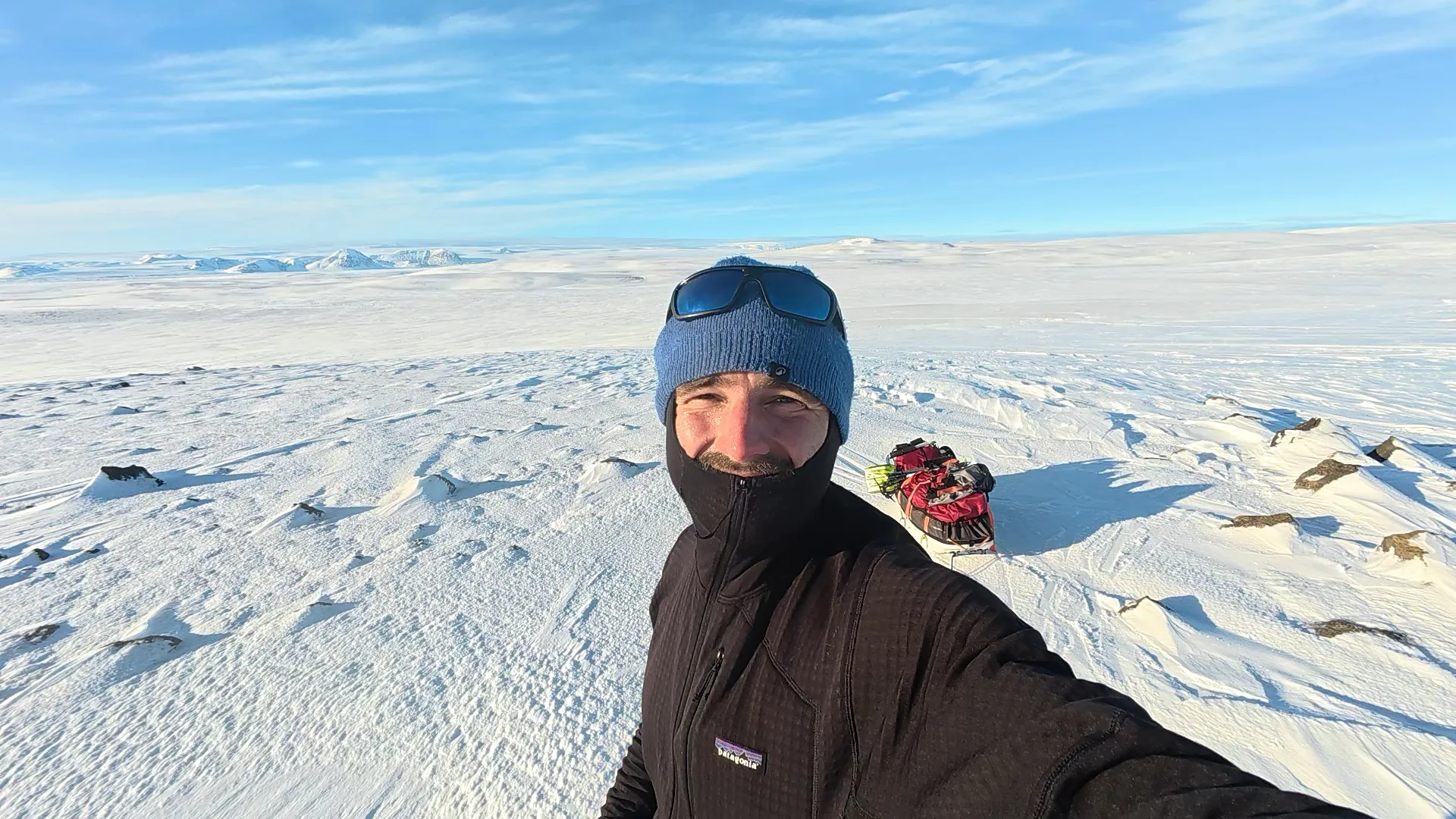
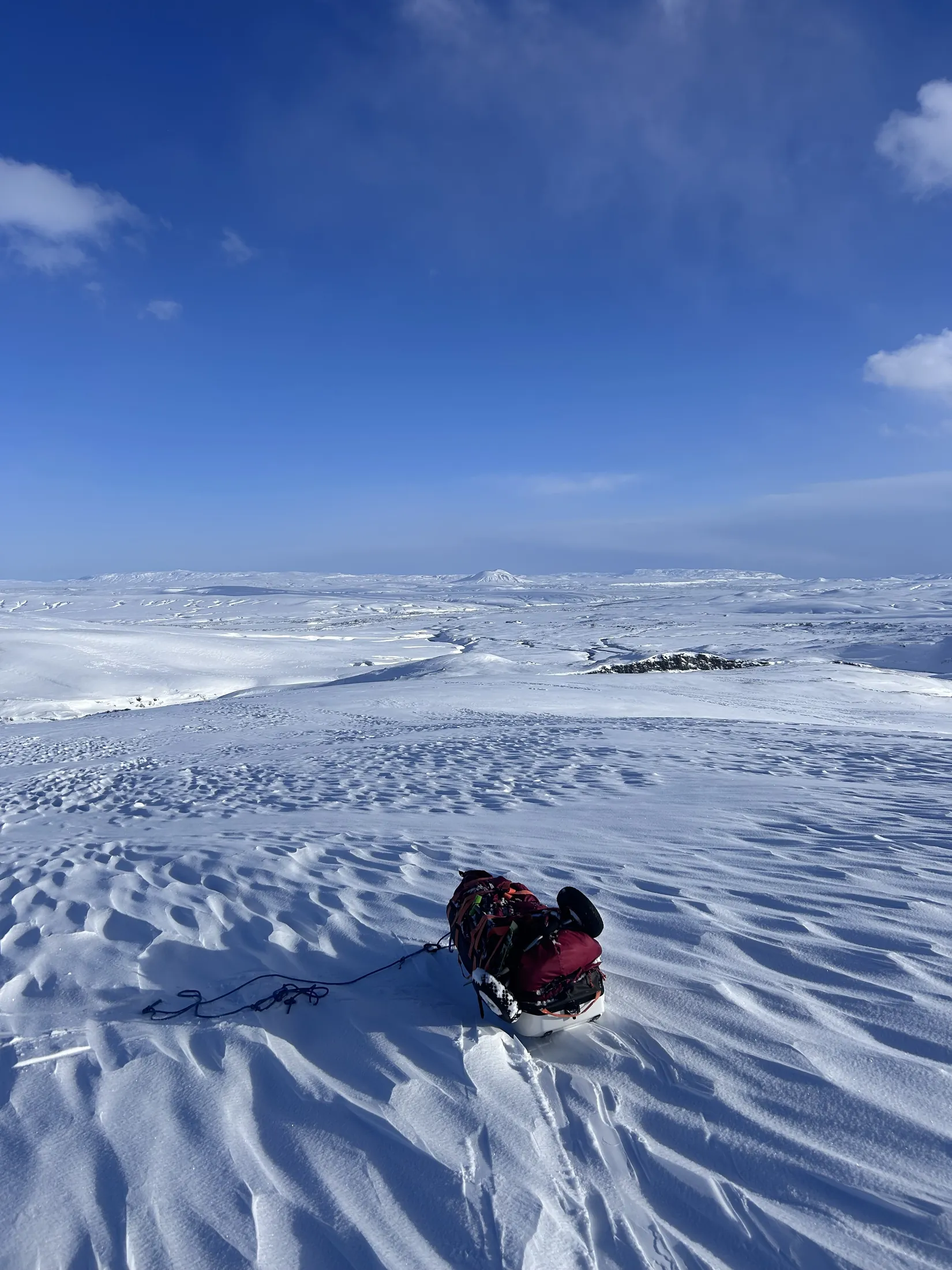
The landscape changes instantly. I finally enter the highlands. Everything becomes flat and the snow is perfect. For the first time since the start, I can truly move. The kilometres pass. I have lost a lot of time, but I no longer look back. My only goal now is the south.
Temperatures drop sharply. It is about -10°C during the day and -15°C at night. With the constant wind, the feel regularly falls between -20 and -25°C.
I have dreamed of this place for months and I can hardly believe I am finally here. For a week, I have not met anyone. Ahead of me, there is only snow to the horizon. This is exactly what I came looking for. Yet that feeling comes with a certain apprehension. Here I am alone and the slightest mistake could have serious consequences.
8
Day 8: Sundog
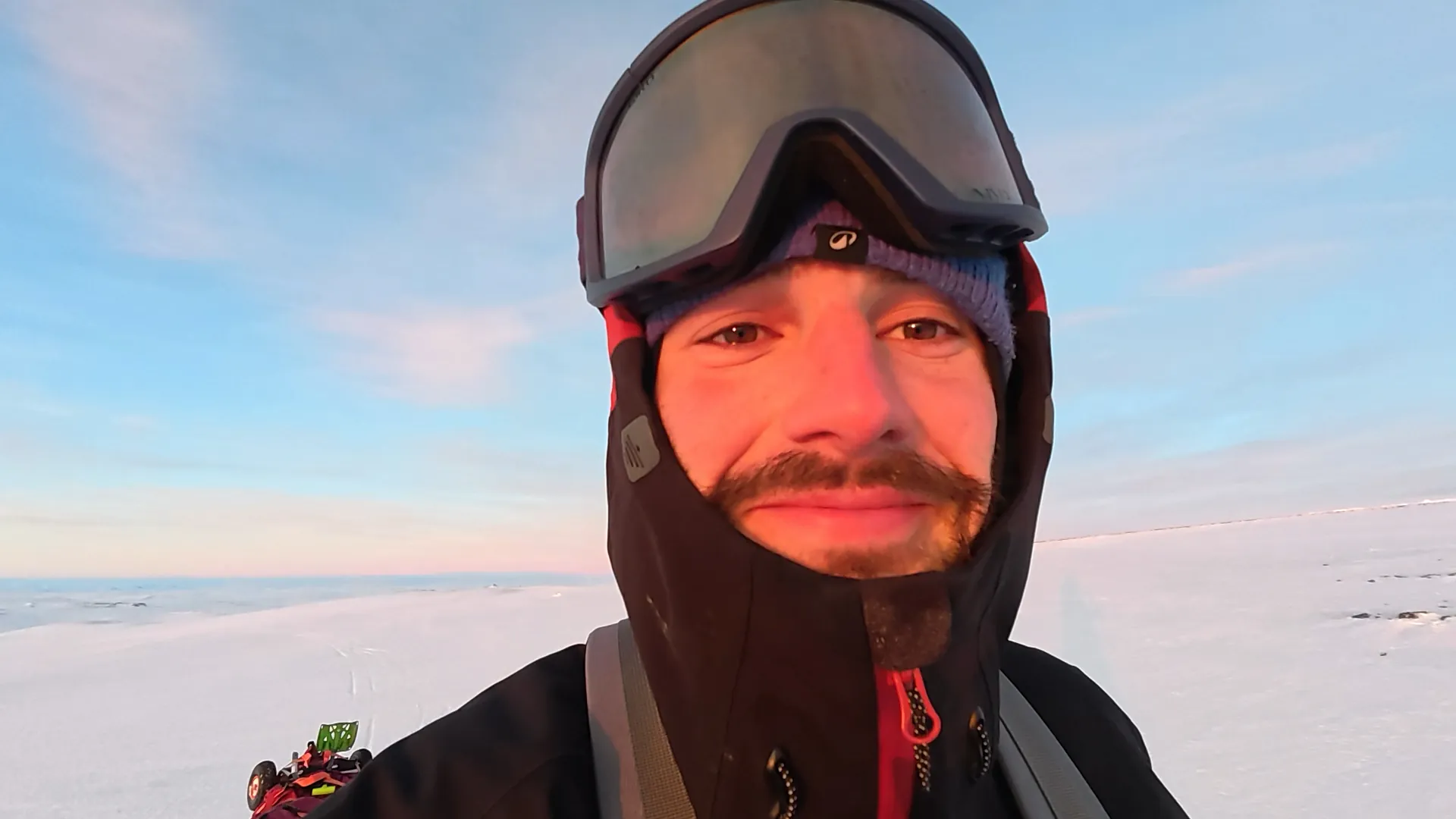
The wind is blowing and my nose shows the first signs of frostbite. I regret not having protected it better. I am making good progress, I feel strong and I am no longer afraid of where I am.
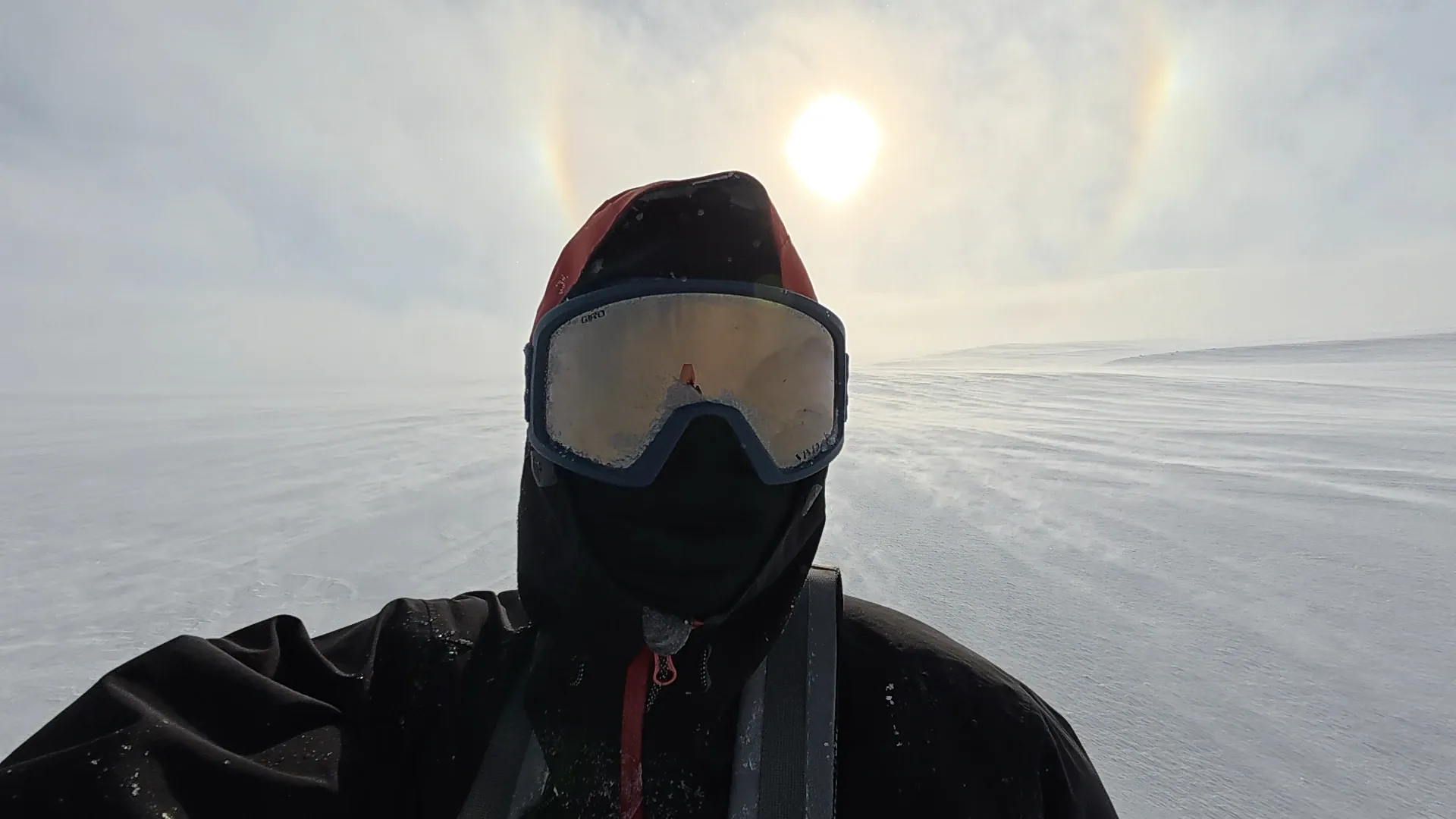
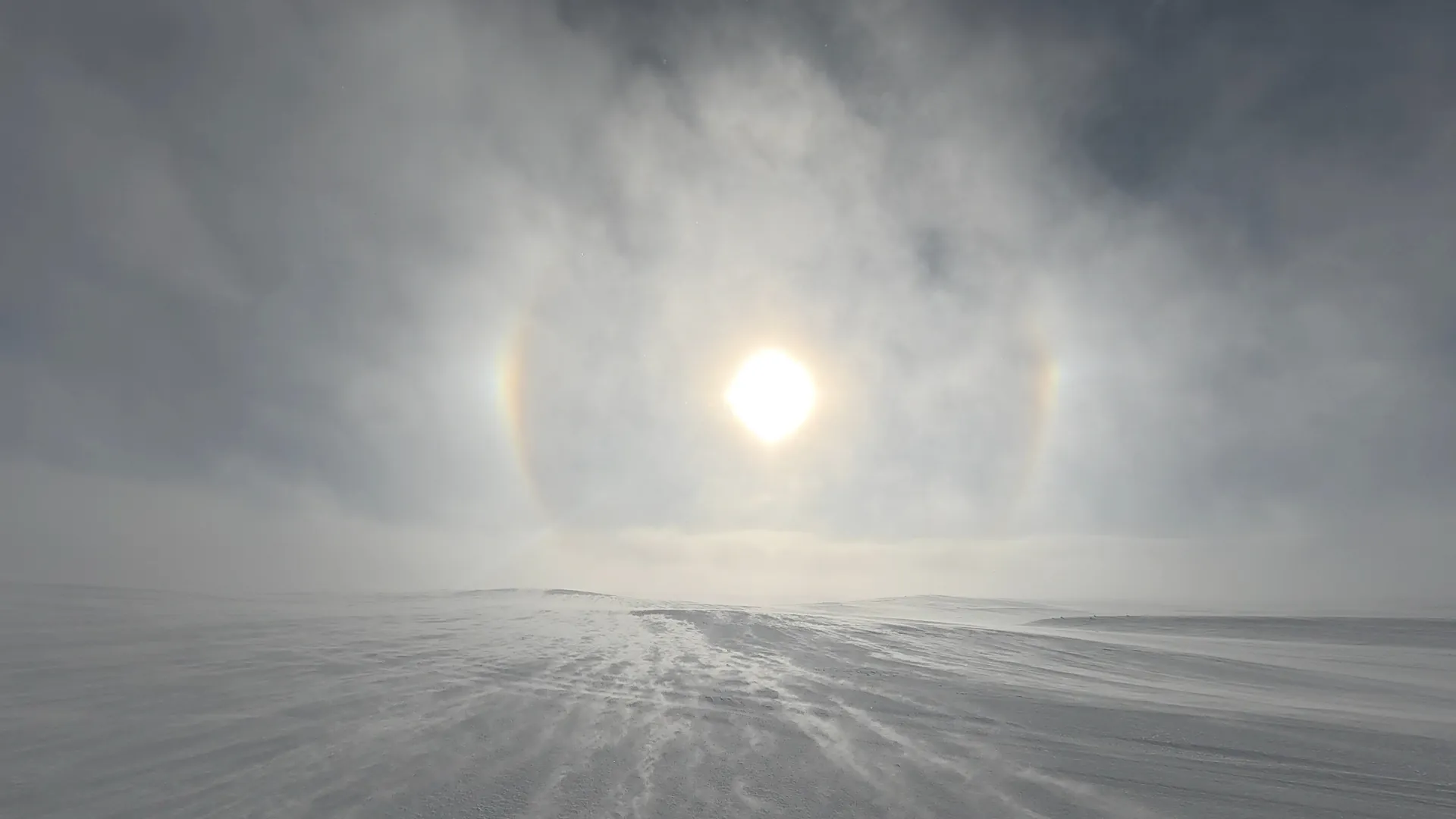
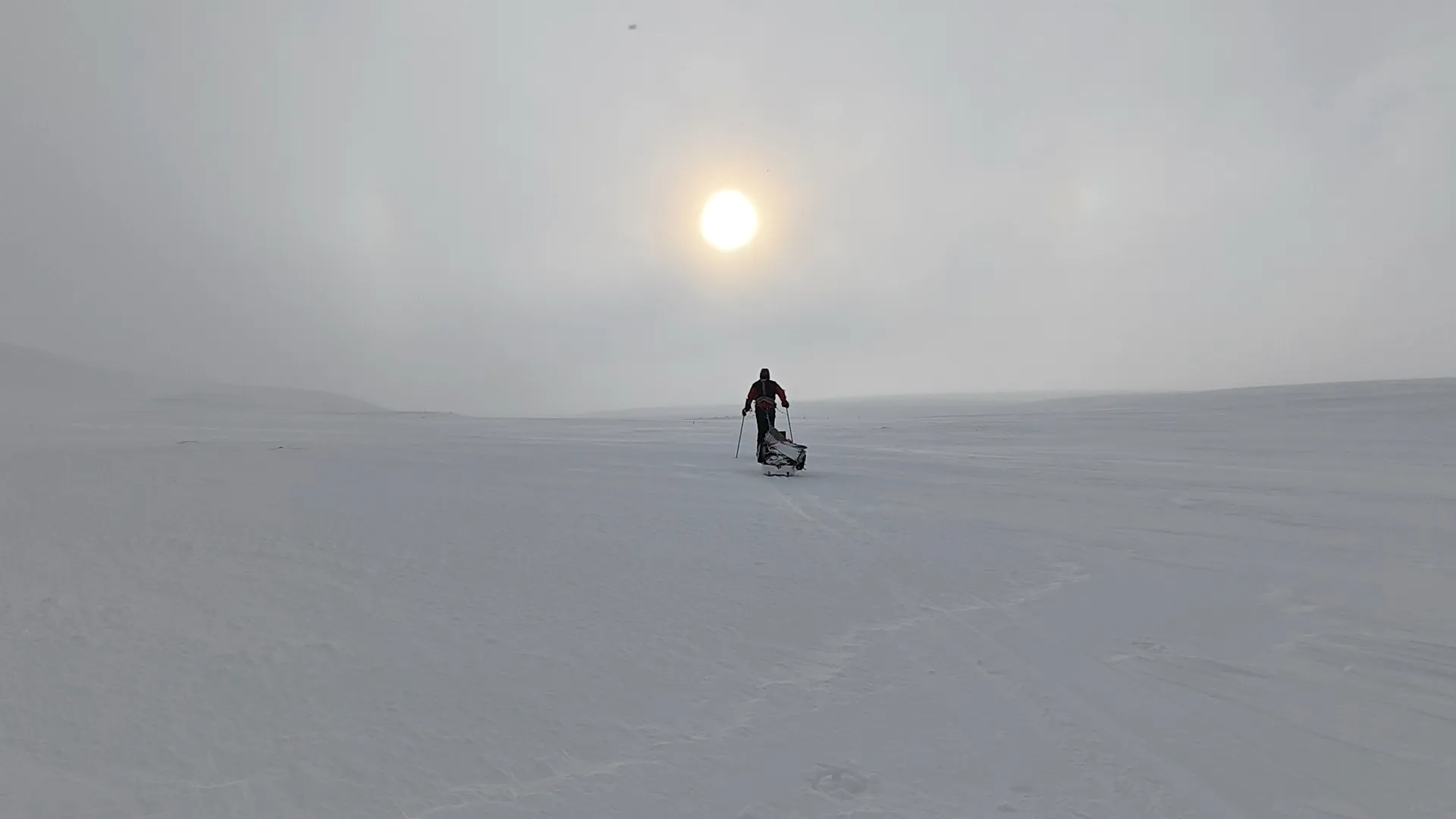
For the first time in my life, I watch a sundog, an optical phenomenon caused by ice crystals suspended in the atmosphere. I am left speechless before such a sight. In that moment, I know that every effort it took to get here was worth it. For this moment alone, the journey was worth it.
9
Day 9: A sunset
I am making good progress. Iceland gives me an ideal weather window and I gradually catch up on the time lost climbing into the highlands. I feel fit, but I am starting to lose weight. Did I misjudge my calorie needs?
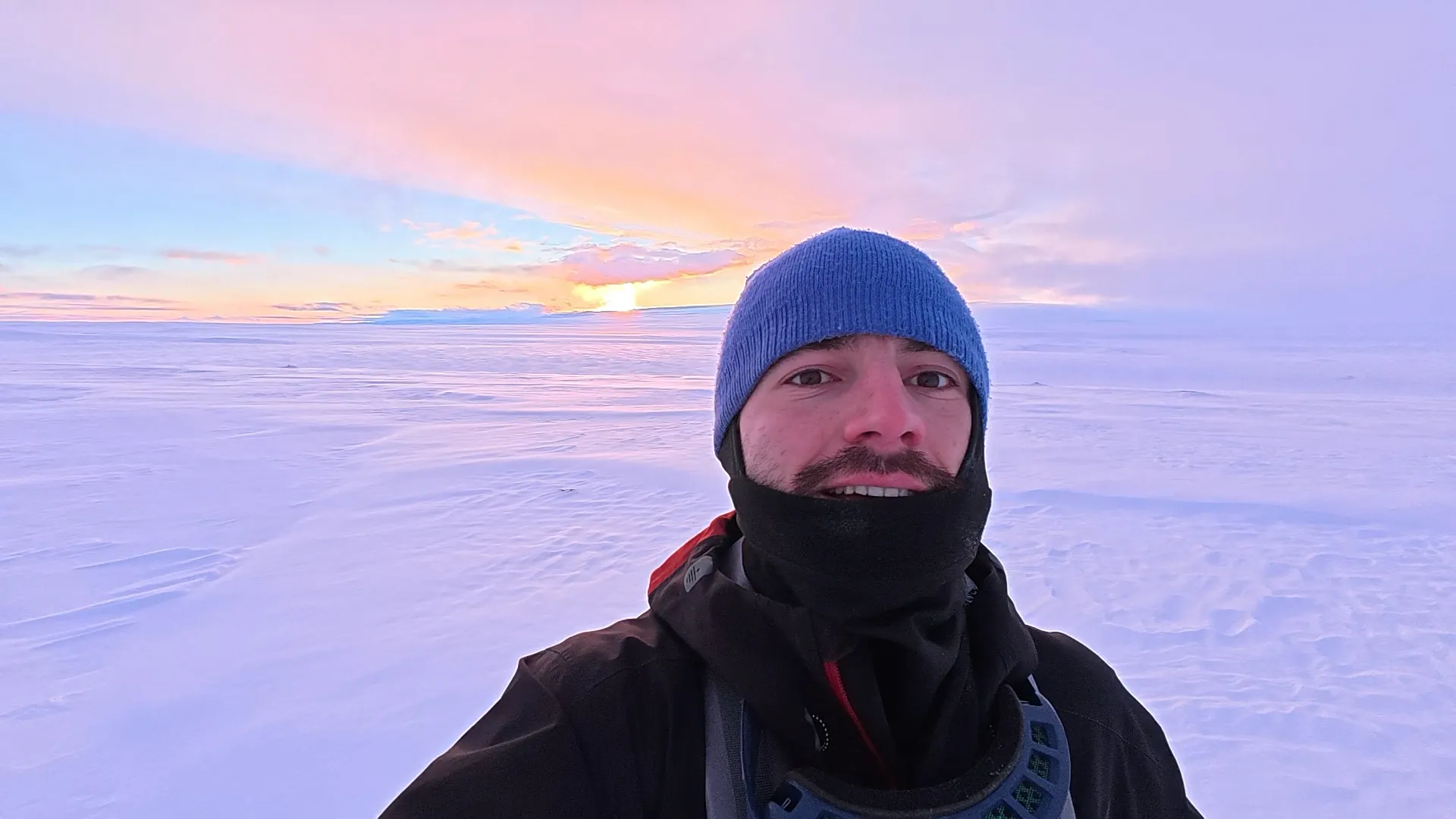
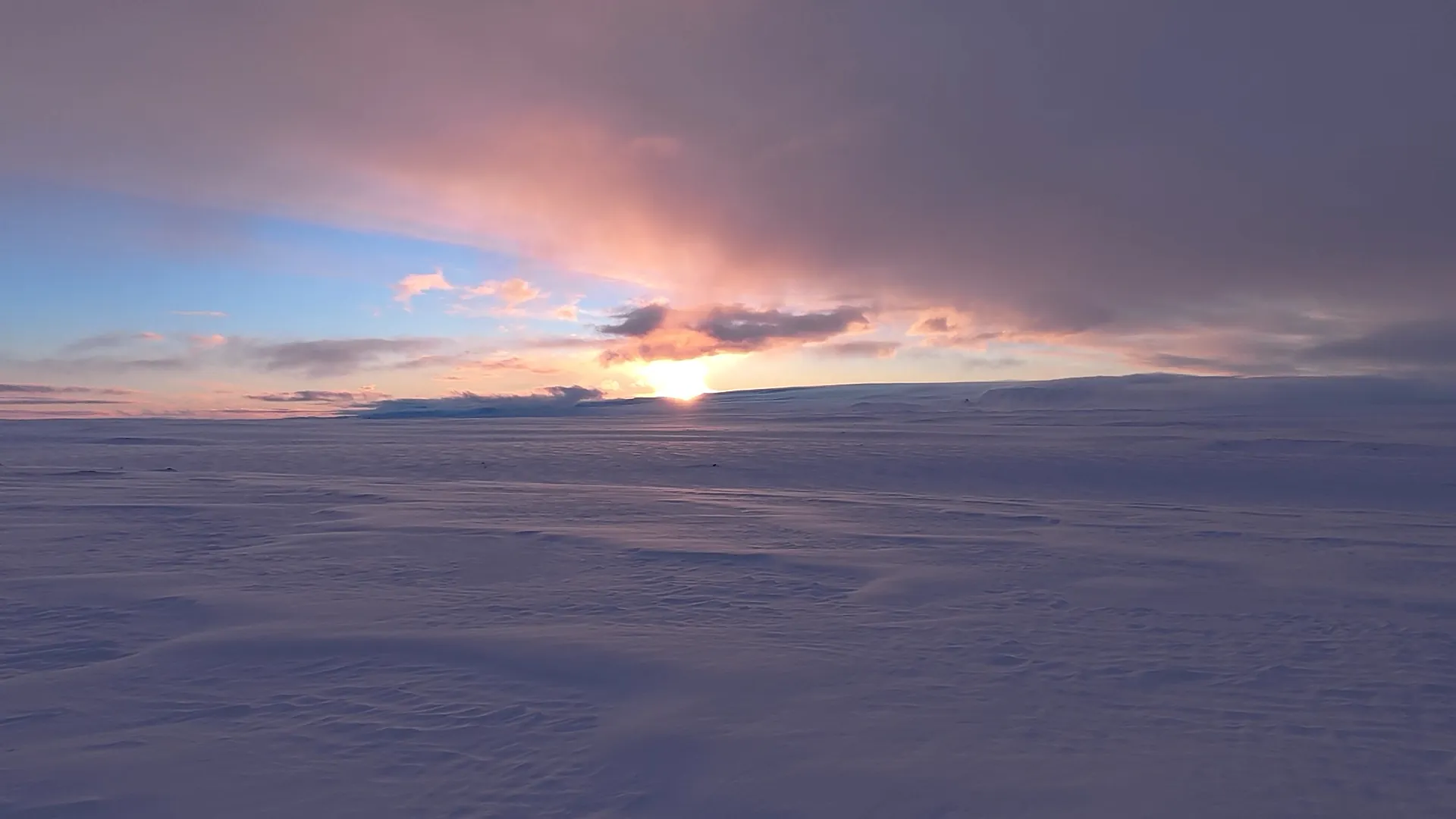
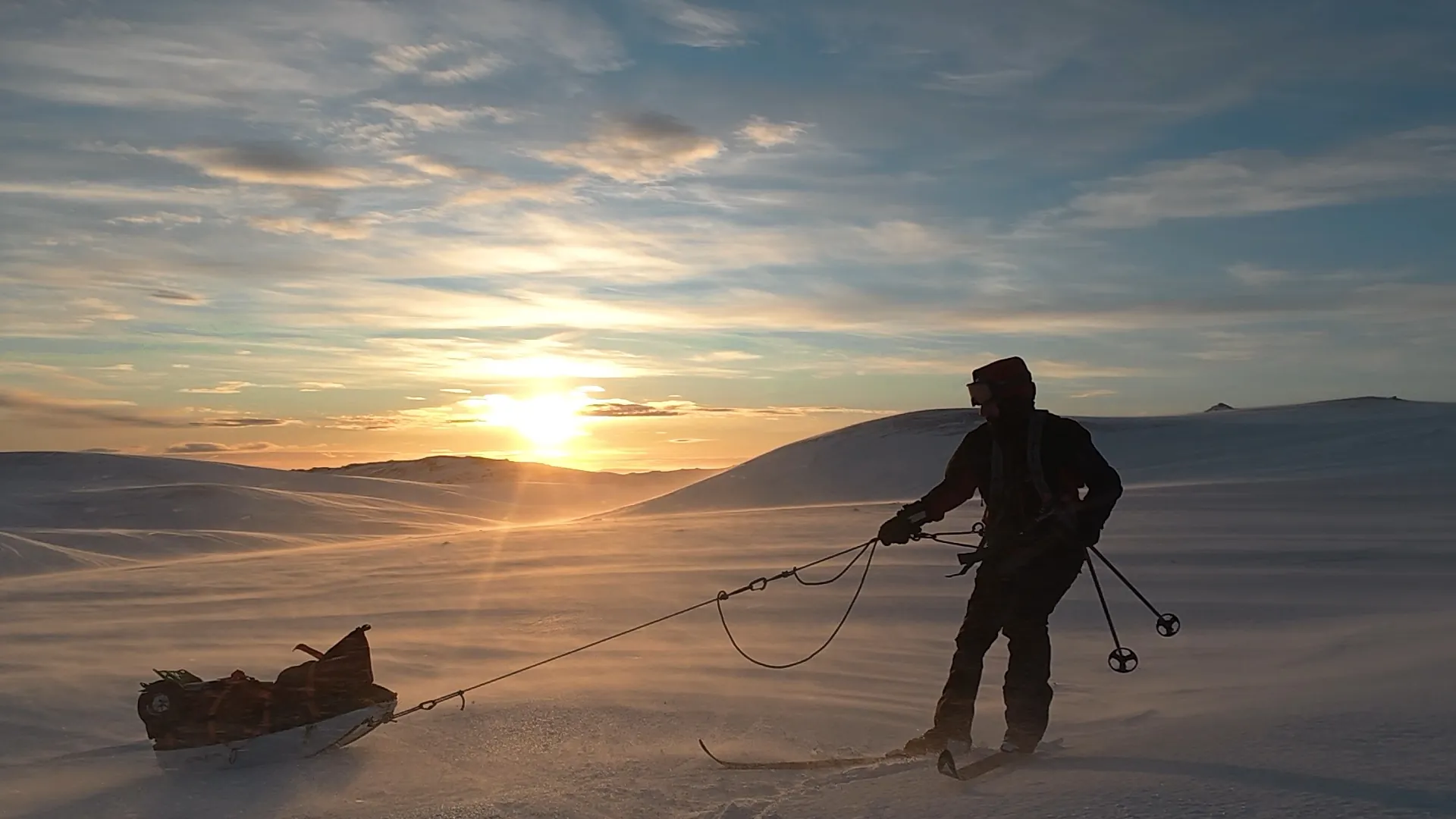
Routine settles in. I ski from morning to night. At the end of the day, the sun disappears slowly behind the mountains. This sunset does not taste like the ones I watch from home. After everything it took to get here, it takes on a particular flavour.
I set course for Nyidalur, a hut open a few months a year when the highlands are accessible. I hope to find it open, like some Alpine huts in winter. It will make a nice change from the tent.
10
Day 10: Nyidalur
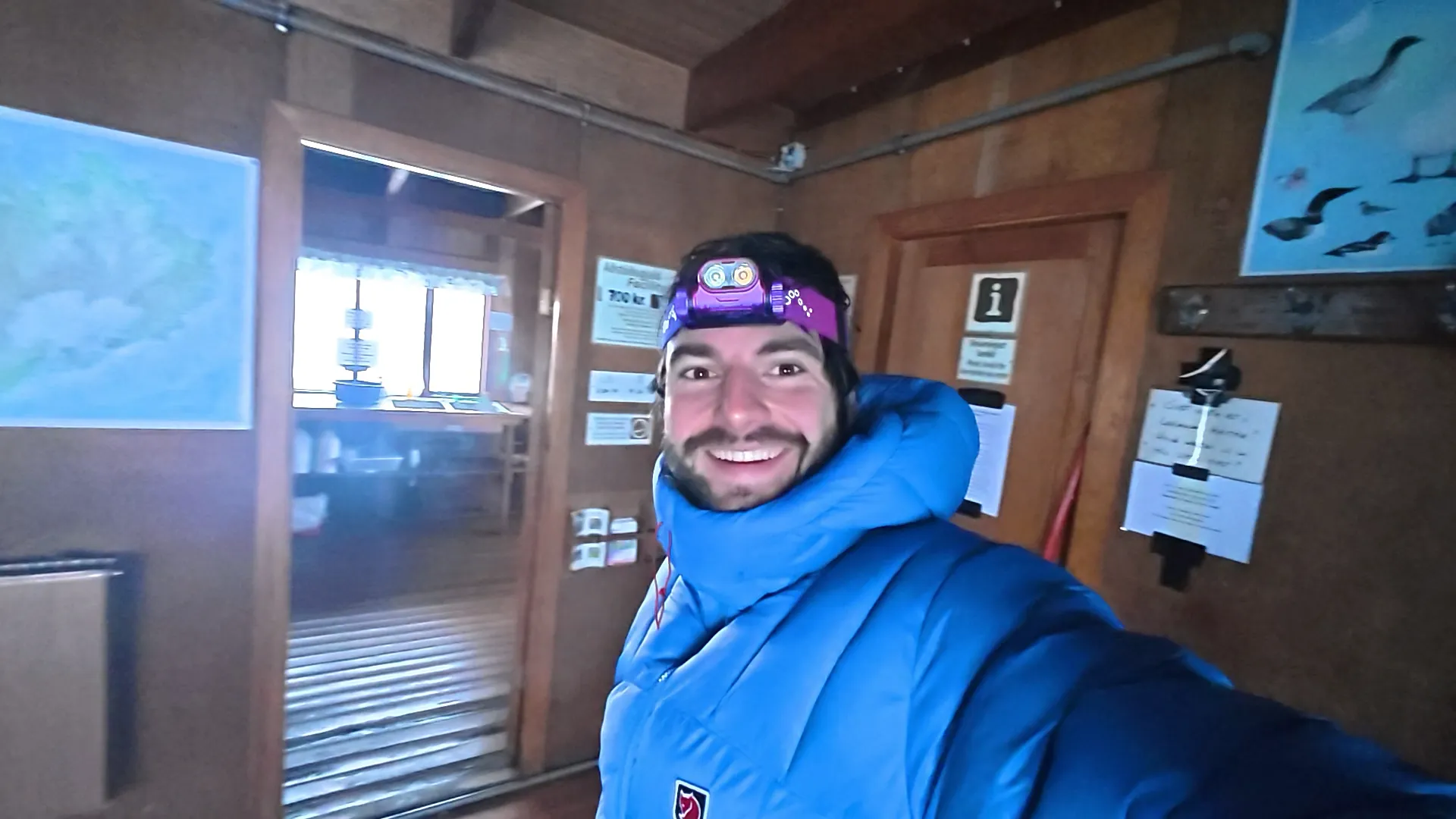
“NYIDALUR!” I shout as I finally spot the little wooden structure in the distance. I can hardly believe that such a building could stand in the middle of nowhere.
The hut is partly buried under snow. I take out the shovel and ice axe to dig a path to the door. I turn the handle… the hut is open.
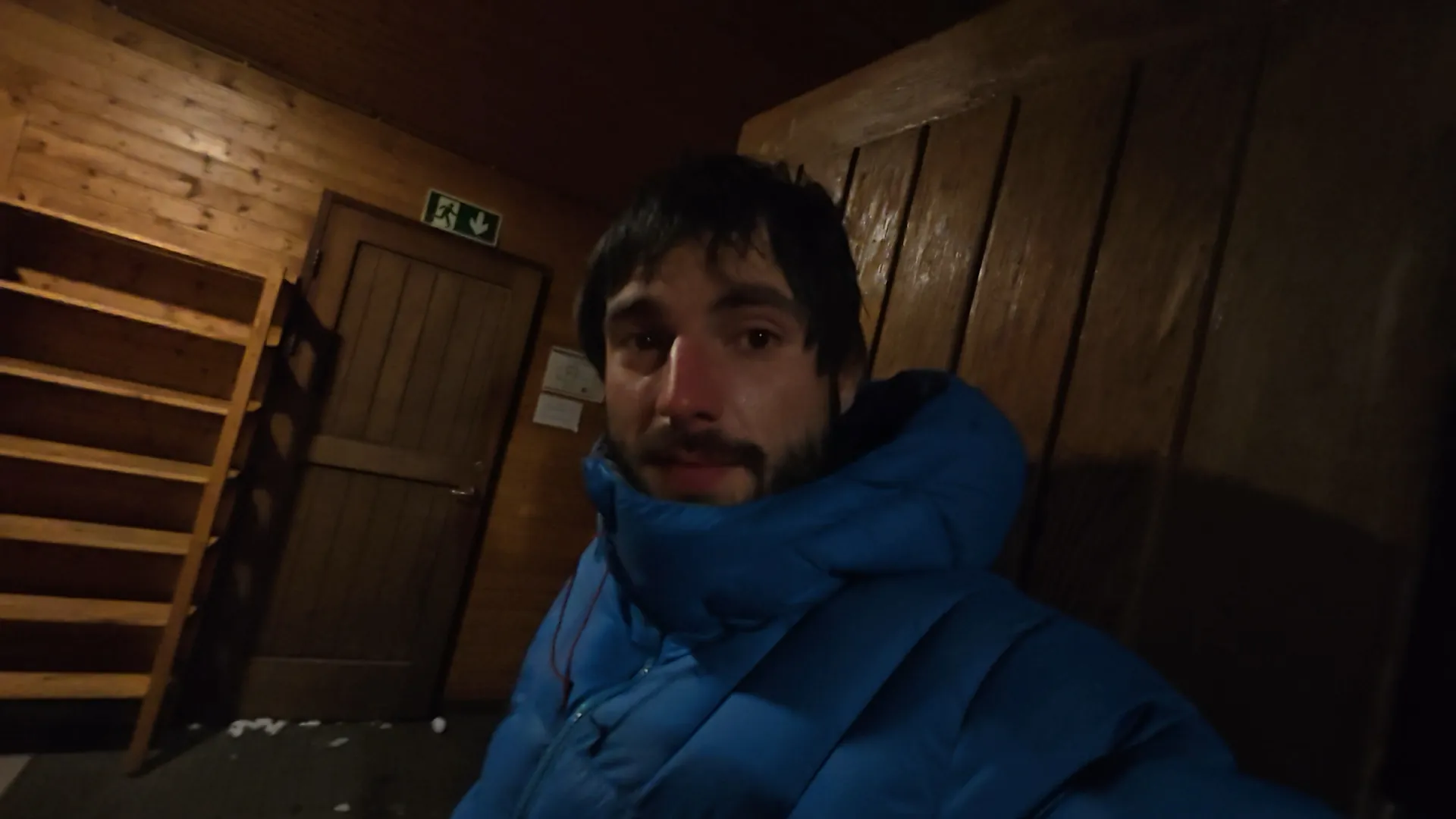
For the first time in ten days, I am sheltered from the wind. I am no longer an animal migrating south. I simply become human again, in a house with a gas kitchen, chairs, and… a bed.
11
Day 11: Preparing for the storm
I leave Nyidalur at 8am. A weather window lets me ski through the day, but a storm is forecast for the night. Rico Météo is always on time. I'm not afraid anymore. I know what to do now. I build a huge snow wall in front of my tent, turn the tent into the wind and double all the guy lines. The wind will blow at over 100 km/h.
12
Day 12: Stuck in a tent
I'm still stuck in the tent. The winds are strong and I have to go out every 3 hours to repair the snow wall. Otherwise the tent won't hold. I try to stay serene. I eat, I drink, I read Sylvain Tesson to pass the time. Iceland is less kind to me.
Sometimes I wonder if she knows I am here, if she knows who I am and what I am doing. I also wonder if she will let me through, if I am worthy of it. Did I leave a packet of nuts on the ground? Did I ski over a sacred place? Those are the kinds of thoughts that end up crossing the mind when you spend several days alone in the middle of nowhere.
I come back to reason quickly. I refuse to let that kind of thinking take over.
13
Day 13: Calm after the storm
The calm after the storm. Iceland opens its doors again. The storm has carved an enormous corridor behind my tent. A phenomenon called a wind shadow. I look on, impressed and I take stock of my expedition.
This is the longest day. I cover 40 km to make up for lost time. It's very cold, around -15°C. Rico Météo tells me tomorrow is a perfect day. I'm reassured.
14
Day 14: A warm day
It is warm! Today there is not a breath of wind. It is 0°C and, after several days in the cold, I almost feel like I am in summer.
I take advantage of it to keep moving. I cover another stage of more than 40 kilometres to keep catching up on lost time. I am still losing weight, but I feel strong.
I set course for Fjallabak National Park, where Landmannalaugar and its geothermal hot springs are. After two weeks in the cold, a bath would be more than welcome…
15
Day 15: The race begins
According to Rico Météo, a storm is expected tomorrow evening. I am crossing a more technical stretch where frozen rivers follow one another. Each of them costs me precious time, while the weather window closes little by little.
I move toward Landmannalaugar. Somewhere, there should also be an abandoned hut. I absolutely have to reach it before the storm arrives.
All of Iceland is on alert. The race against the clock begins.
16
Day 16: Landmannalaugar
The landscape changes again. Mountains gradually replace the vast plateau. Progress becomes more technical: on the climbs, I feel the full weight of my sled and on the descents it becomes hard to control.
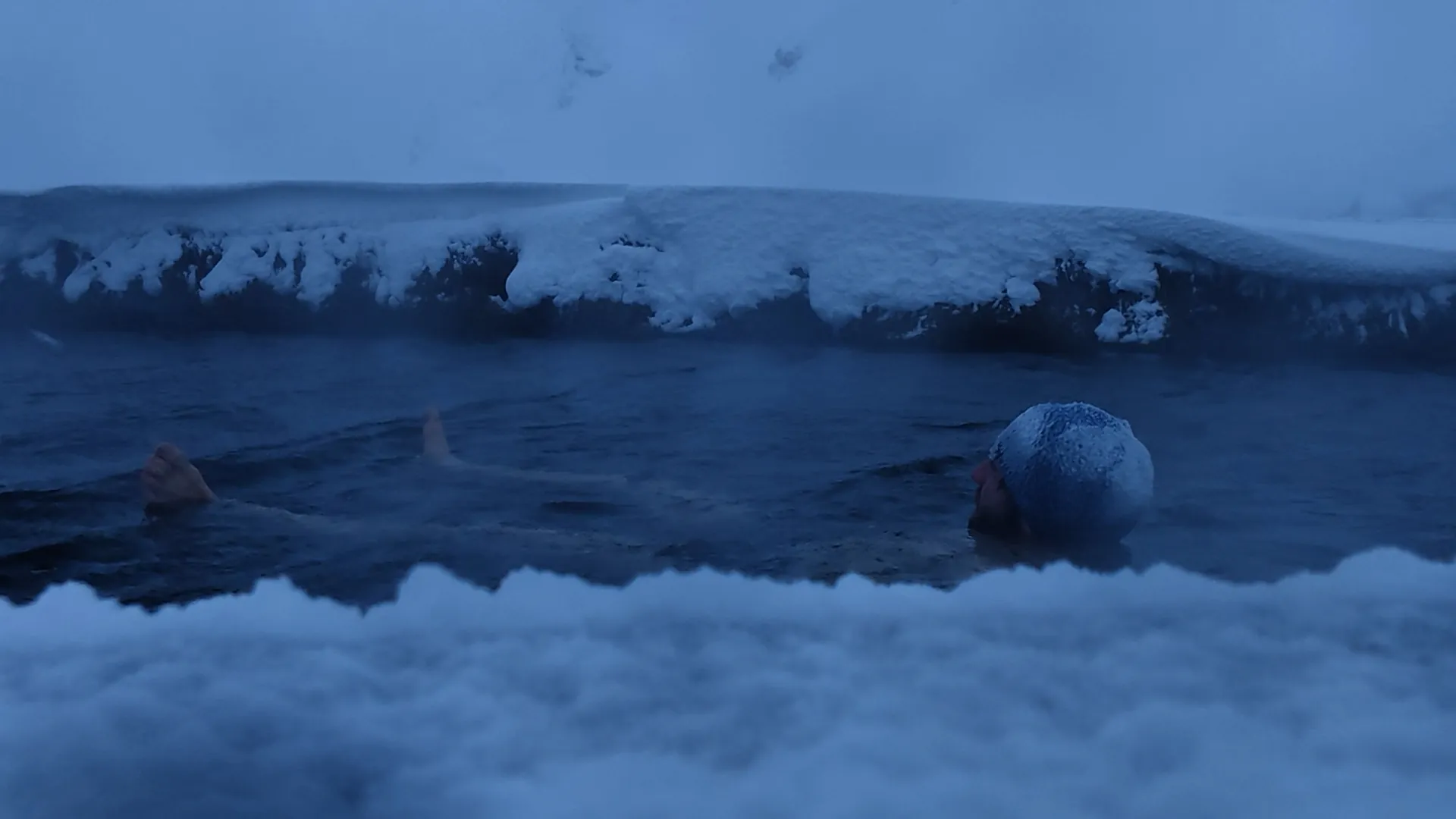
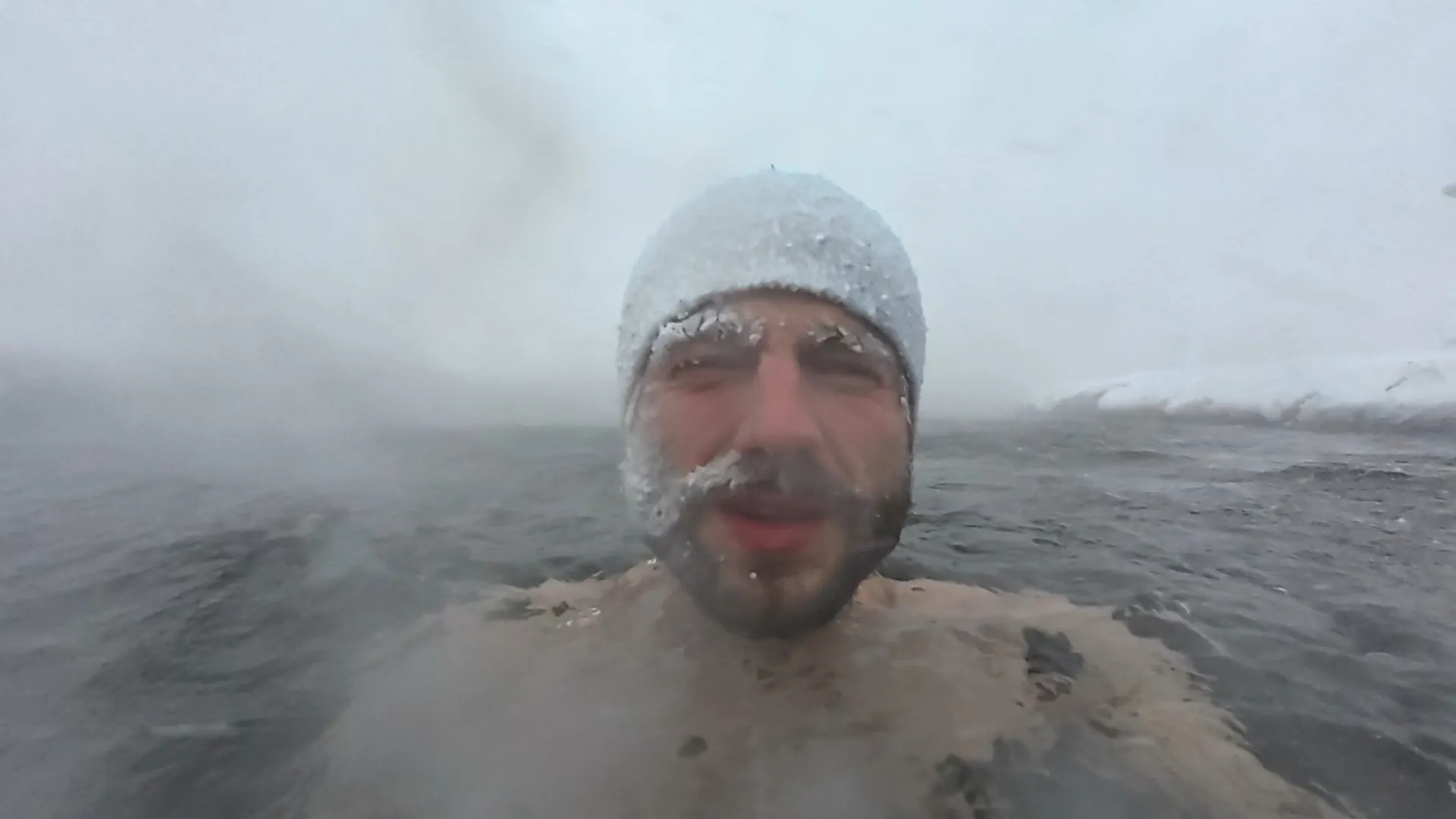
The wind picks up. I sense the storm approaching. I finally reach Landmannalaugar, where I allow myself a bath in a hot spring in the middle of nowhere. Then I find the abandoned hut. It will be only the second time since the start that I sleep between four walls.
A few hours later, the storm arrives. It will blow without interruption for the next thirty hours. I am so relieved to have made it in time.
17
Day 17: Stuck in the hut
The storm is roaring outside and making the hut's wood creak. During a lull, I decide to take a bath in the hot spring despite the storm. It was not such a good idea after all.
I keep busy reading the hut's Golden Book. The next visitors will probably be surprised to find a winter entry signed by me.
I brought too much stove fuel. I leave a canister for the next adventurer to pass through. There is also pasta and olive oil left in the hut. I devour nearly 500 grams of it before falling asleep for fourteen hours of deep sleep.
18
Day 18: The lower plateau
I leave the hut around 9 in the morning, once the winds have eased enough. From now on, I have to leave Fjallabak National Park and begin the long descent from the highlands.
The first hours are extremely exhausting. Fresh snow slows my progress to less than 0.5 km/h. I talk to myself so I do not go crazy. Every kilometre demands a considerable effort.
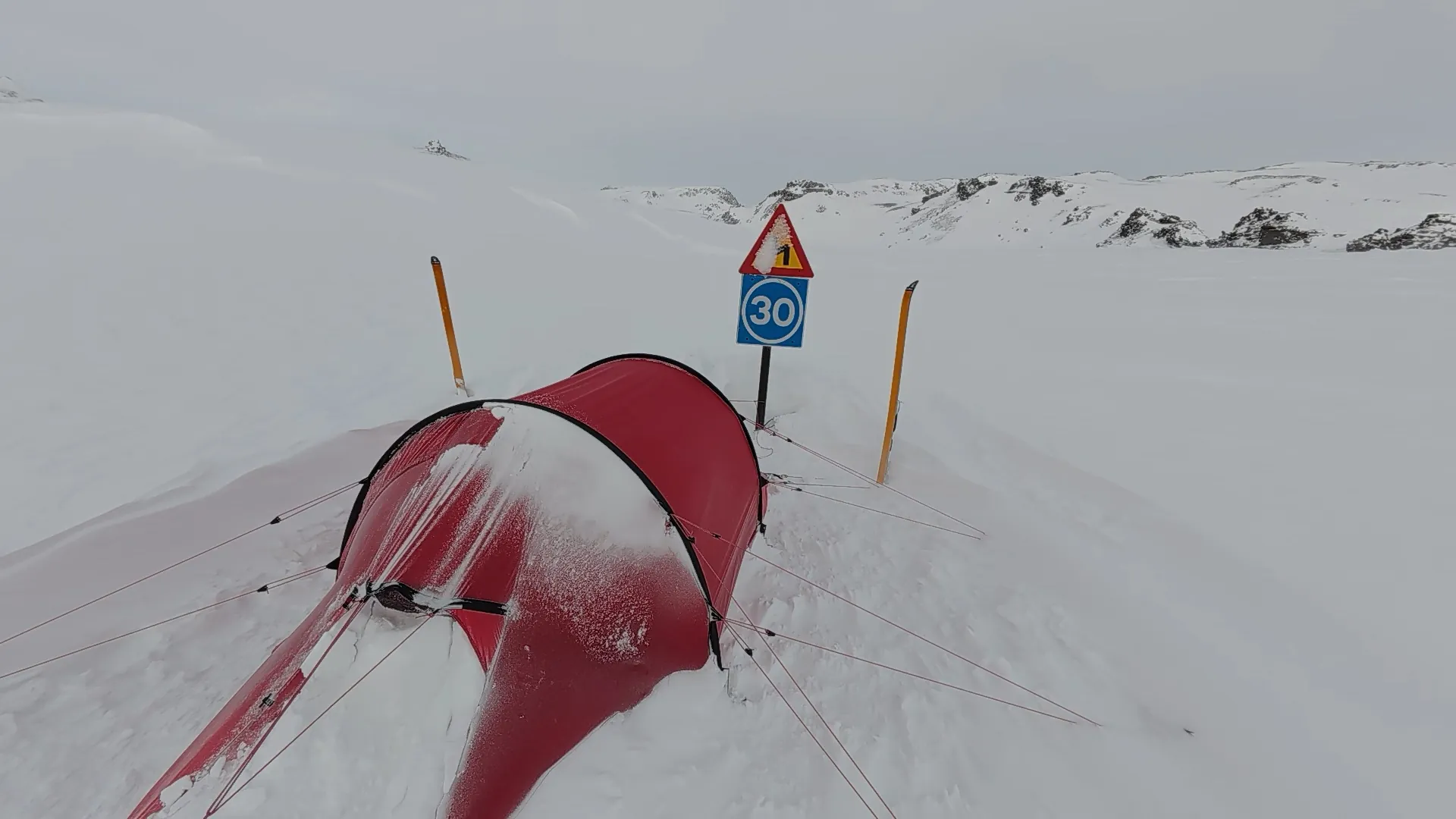
I finally make it out of the national park. Ahead of me stretches the lower plateau. I start the descent and, quickly, everything becomes easier. The first signs of civilization reappear. I decide to pitch my tent next to a speed-limit post almost entirely buried under snow. I make some tea and fall asleep.
19
Day 19: A perfect choice
The descent goes well. I had chosen this route largely for how easy this last stretch would be. Looking back, it was the right choice. Post-Iceland Harold thanks the Harold from before Iceland. It is almost poetic.
The kilometres pass. The pulka glides easily and, for the first time in a long while, I can enjoy the landscape without keeping my eyes fixed on the weather or the ground. I sense the expedition is coming to an end, but I stay wary. In Iceland, everything can change in a few minutes.
I am starting to know this island, its landscapes and its character. But one thing is certain: I will never tame it.
20
Day 20: The ocean on the horizon
I ski all day and cross the last frozen rivers. Everything has become simpler. I have adapted to this environment that intimidated me so much at the start.
At the end of the day, I spot a thin blue band on the horizon. There is no doubt: it is the ocean. I stop for a few moments to look at it. After weeks of moving south, it is finally there.
I feel a strange mix of pride and nostalgia. The adventure will soon be over. The last kilometres of the day unfold in an almost meditative state. I smile thinking back to my misadventures in the canyon, before reaching the highlands.
I hope the highlands will keep of me the memory of someone brave, as I will keep of them the memory of a place as magnificent as it is terrifying.
21
Day 21: Arrival at the ocean
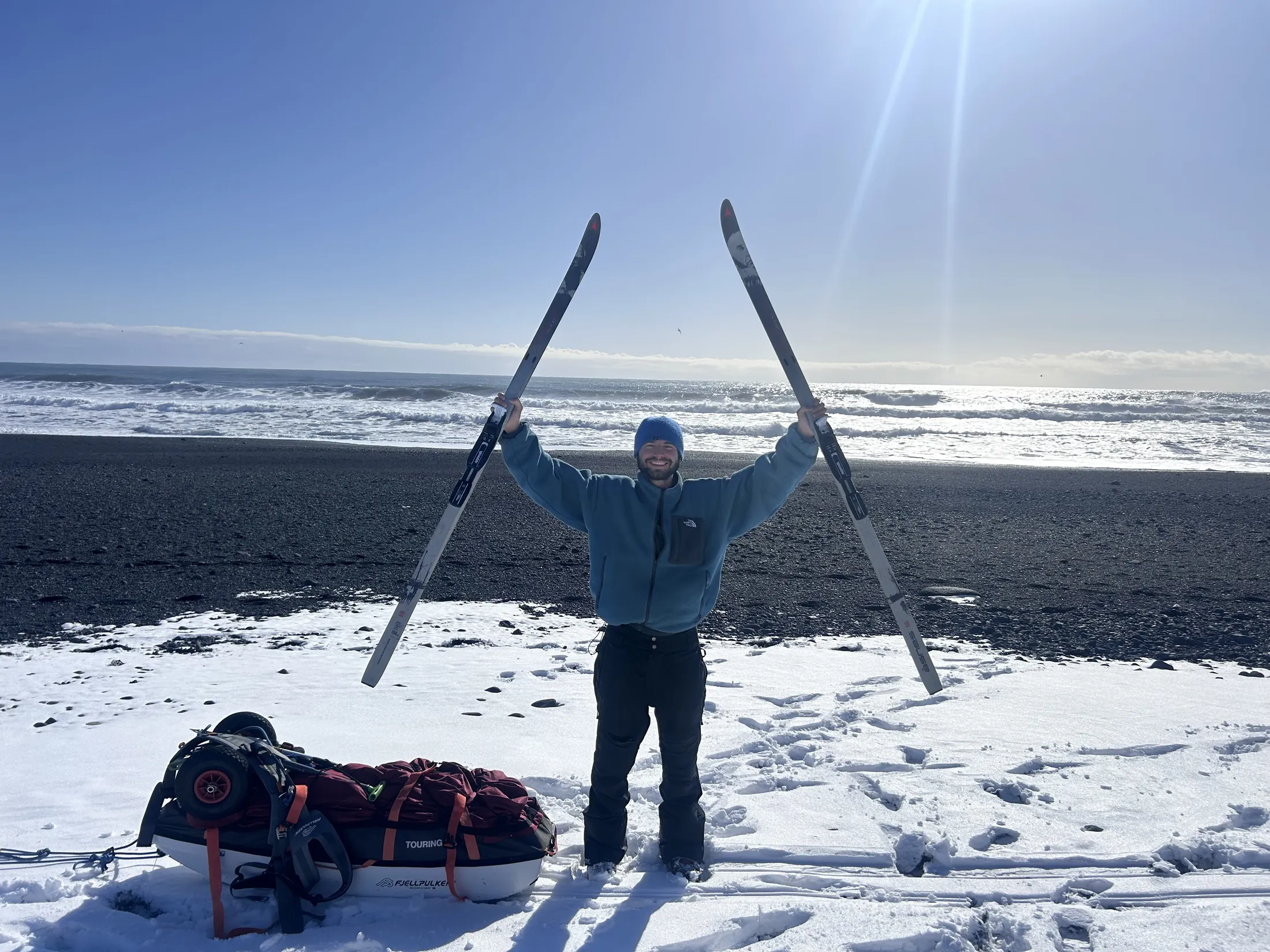
I have arrived. I hear the ocean raging. I stop for a few moments to look at it. It is strange not to feel happier. A line comes to me at once: it is not the destination that counts, it is the journey.
I am back in civilization. It is almost unreal. If I want, I can go eat a pizza… or sushi. I never want to see my dehydrated bolognese or my cocoa oatmeal again.
A lot of people come to ask me questions. Some invite me to eat, others offer me a place to stay for the night.
I lost nearly 10 kg, but I leave with far more than what I had carried in my sled.